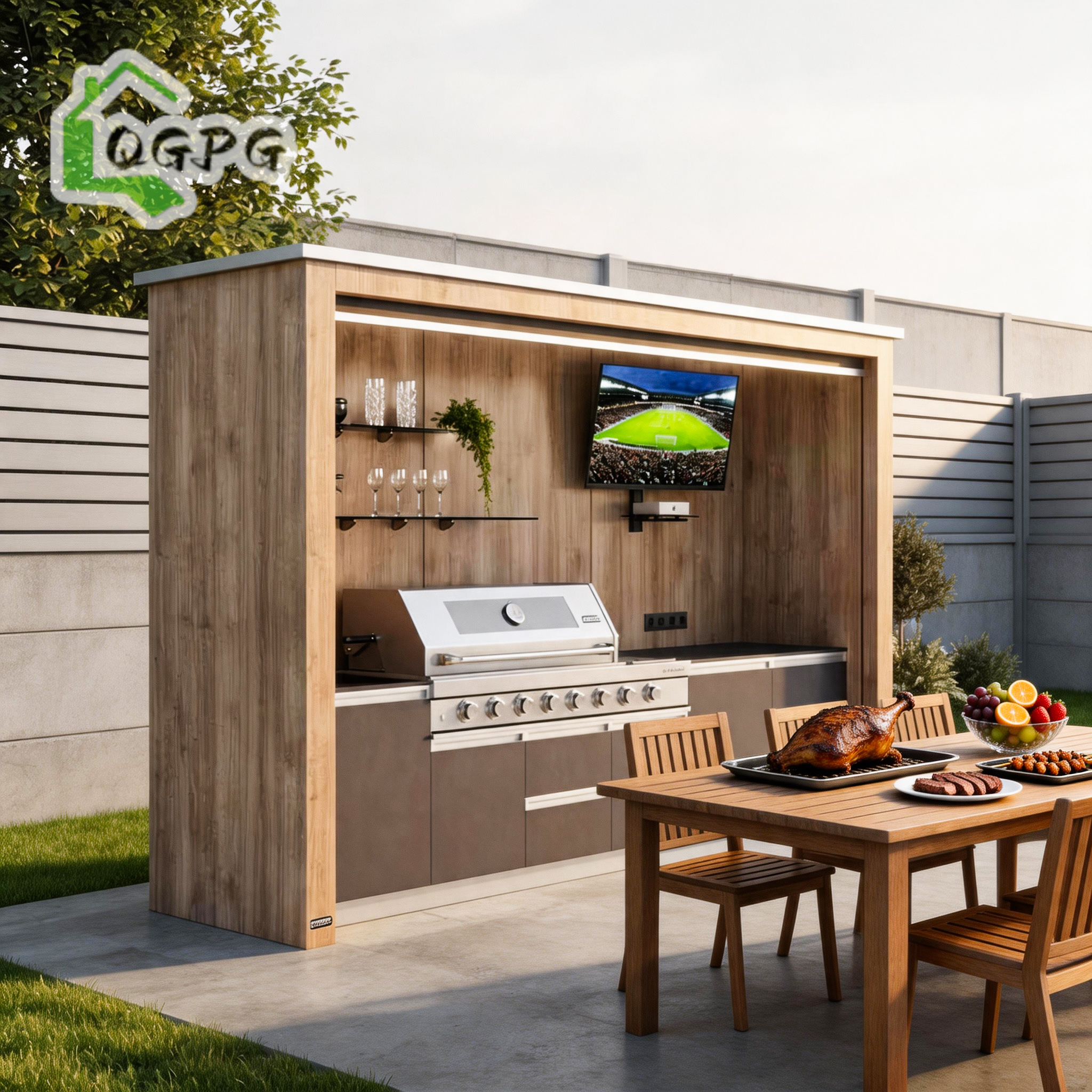
Premium 304 Stainless Steel Hydraulic Canopy Outdoor Kitchen
Fully enclosed weatherproof module featuring motorized hydraulic canopy, integrated barbecue station, sink, and commercial refrigeration.
Inquire NowNavigating the global supply chain for modular construction demands rigorous technical evaluation. This whitepaper analyzes the world's leading expandable container building factories, highlighting engineering breakthroughs, manufacturing standards, and direct OEM procurement models.
Engineered for high-end residential, commercial, and hospitality deployment, these expandable container structures integrate heavy-duty hydraulic folding mechanisms, 304 stainless steel framing, and all-weather thermal insulation.
Fully enclosed weatherproof module featuring motorized hydraulic canopy, integrated barbecue station, sink, and commercial refrigeration.
Inquire Now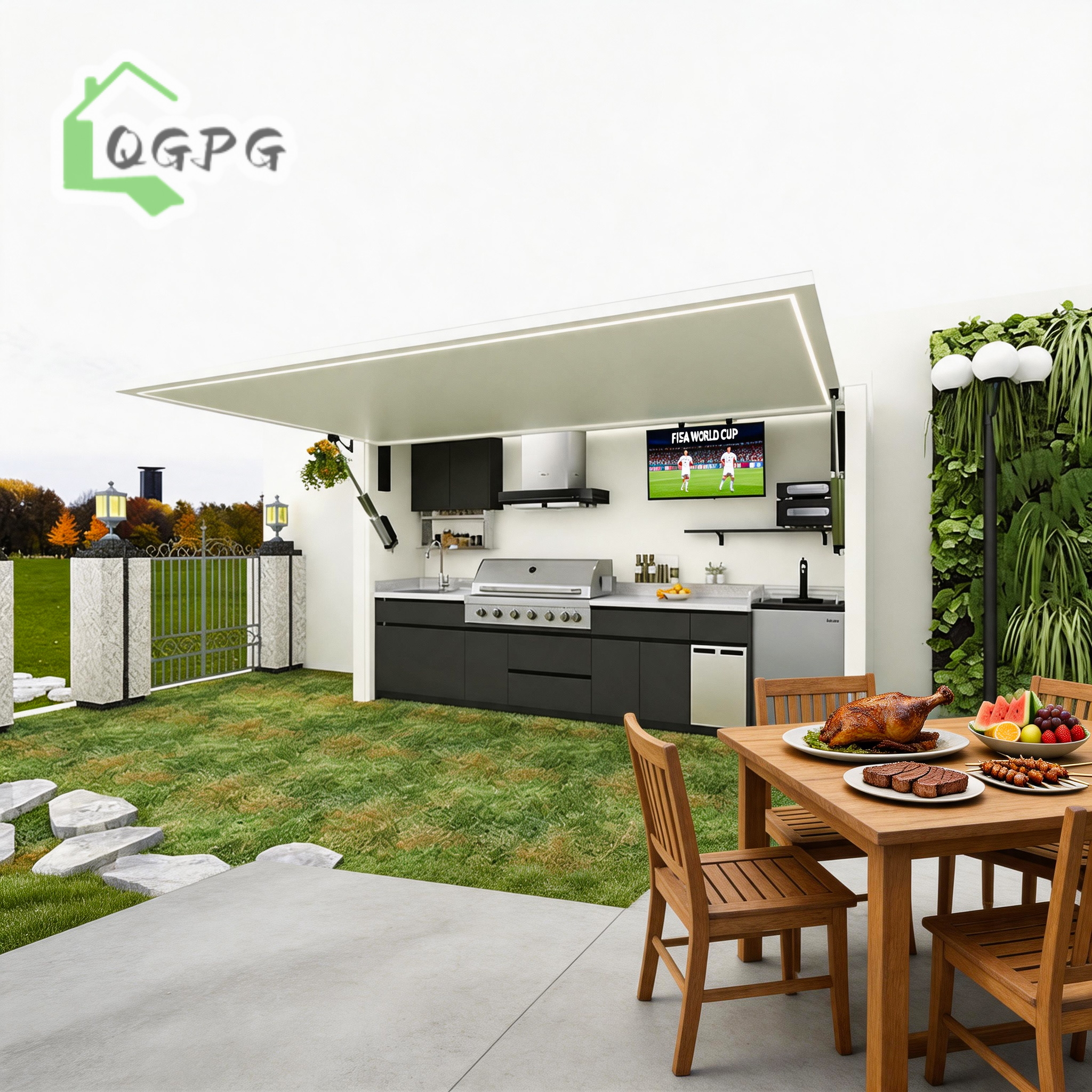
Engineered for luxury villa resorts with marine-grade 304 stainless steel flip-up doors and seamless outdoor culinary integration.
Inquire Now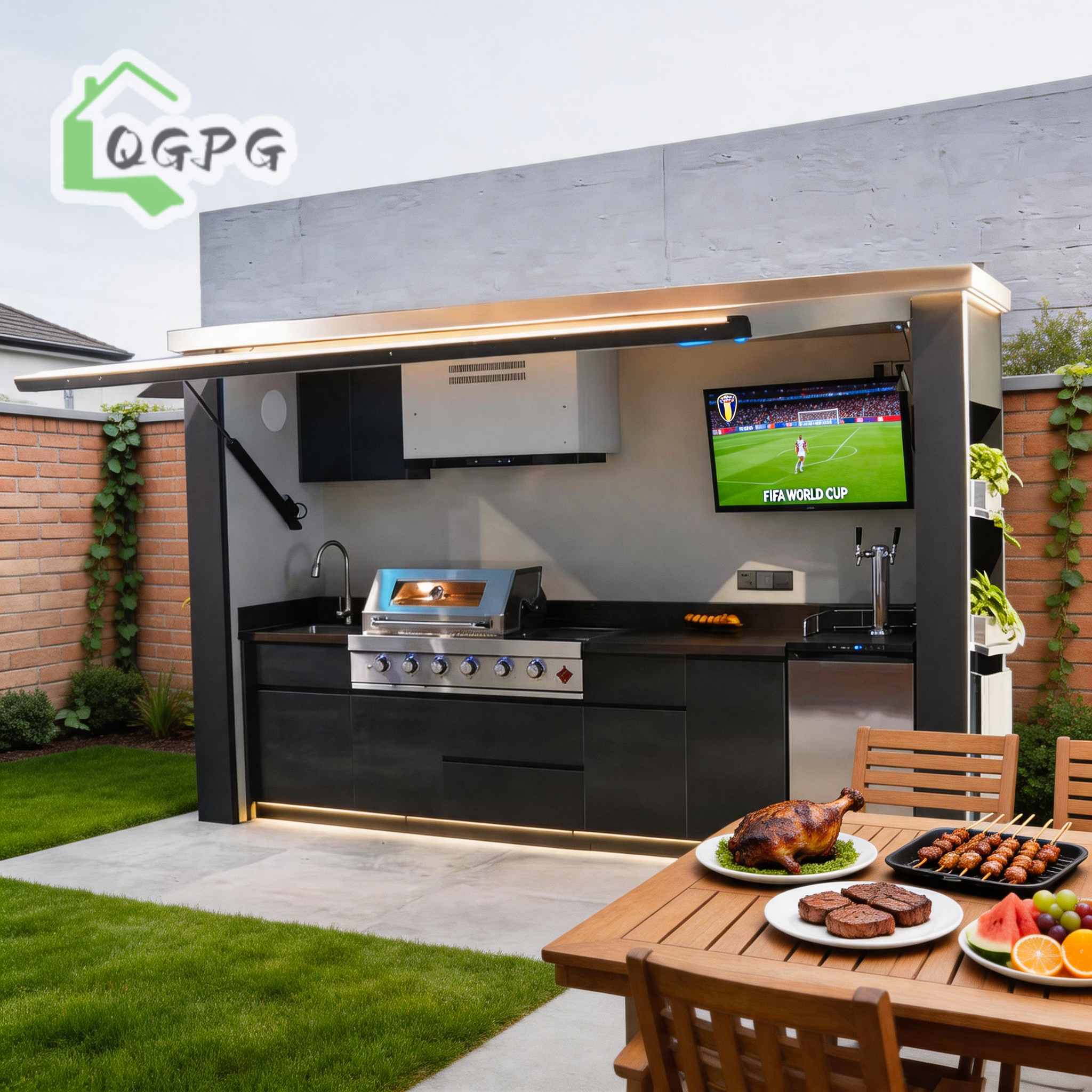
Heavy-duty expandable dual-wing container system built for high-capacity outdoor hospitality and commercial garden entertainment.
Inquire Now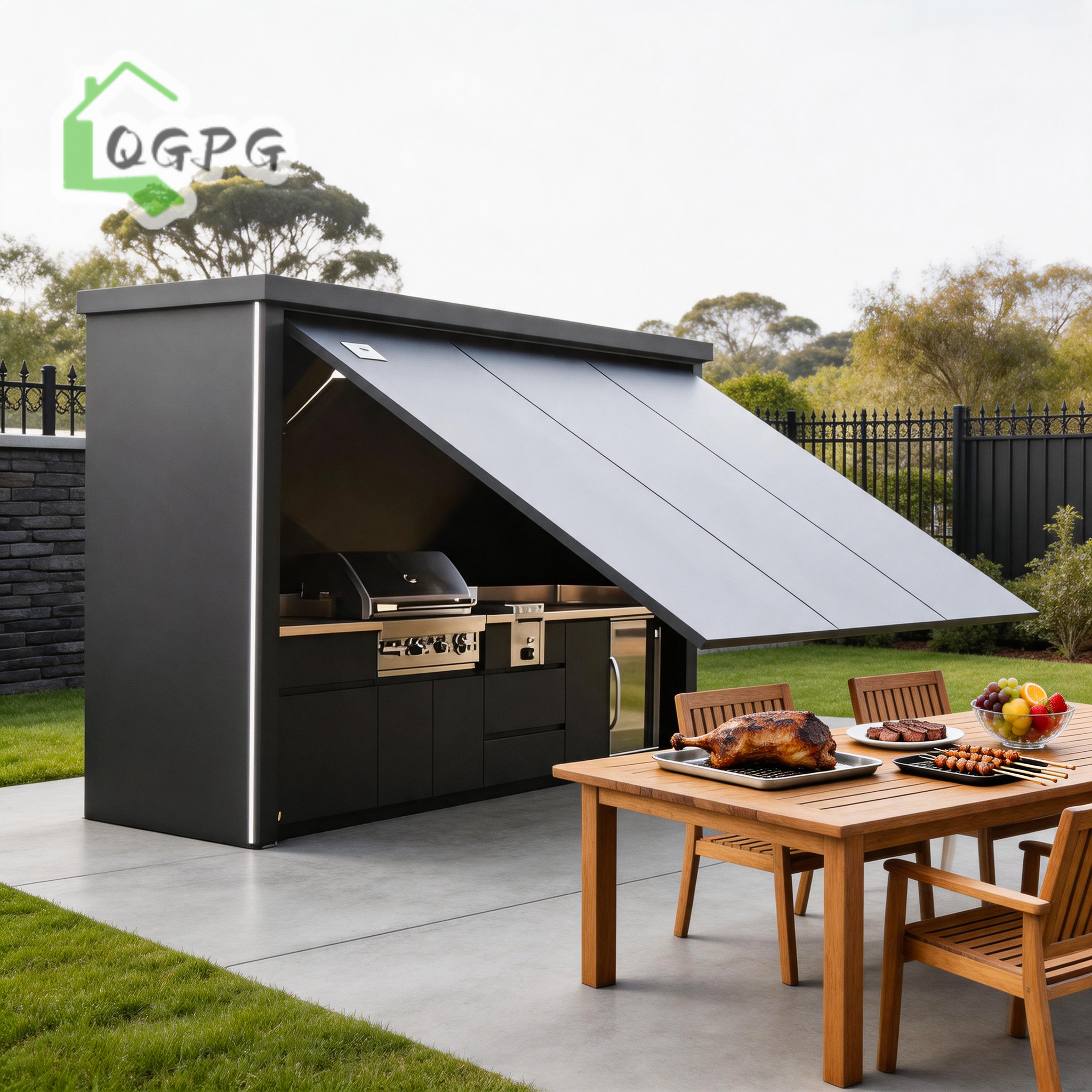
Lightweight high-strength aluminum frame with electric hydraulic elevation, corrosion protection, and built-in premium kitchen appliances.
Inquire Now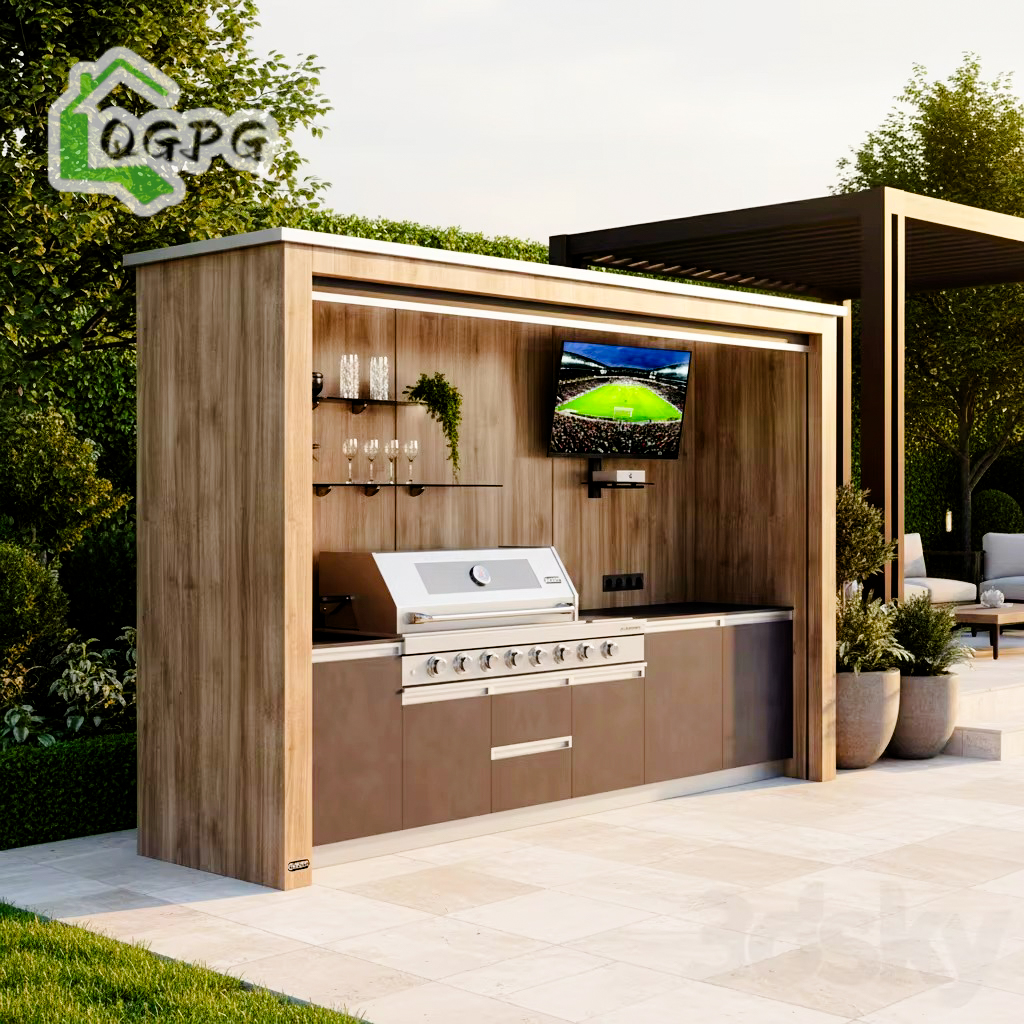
Automated flip-up access door system with ambient LED lighting, full stainless cabinet, and integrated storage for private villas.
Inquire Now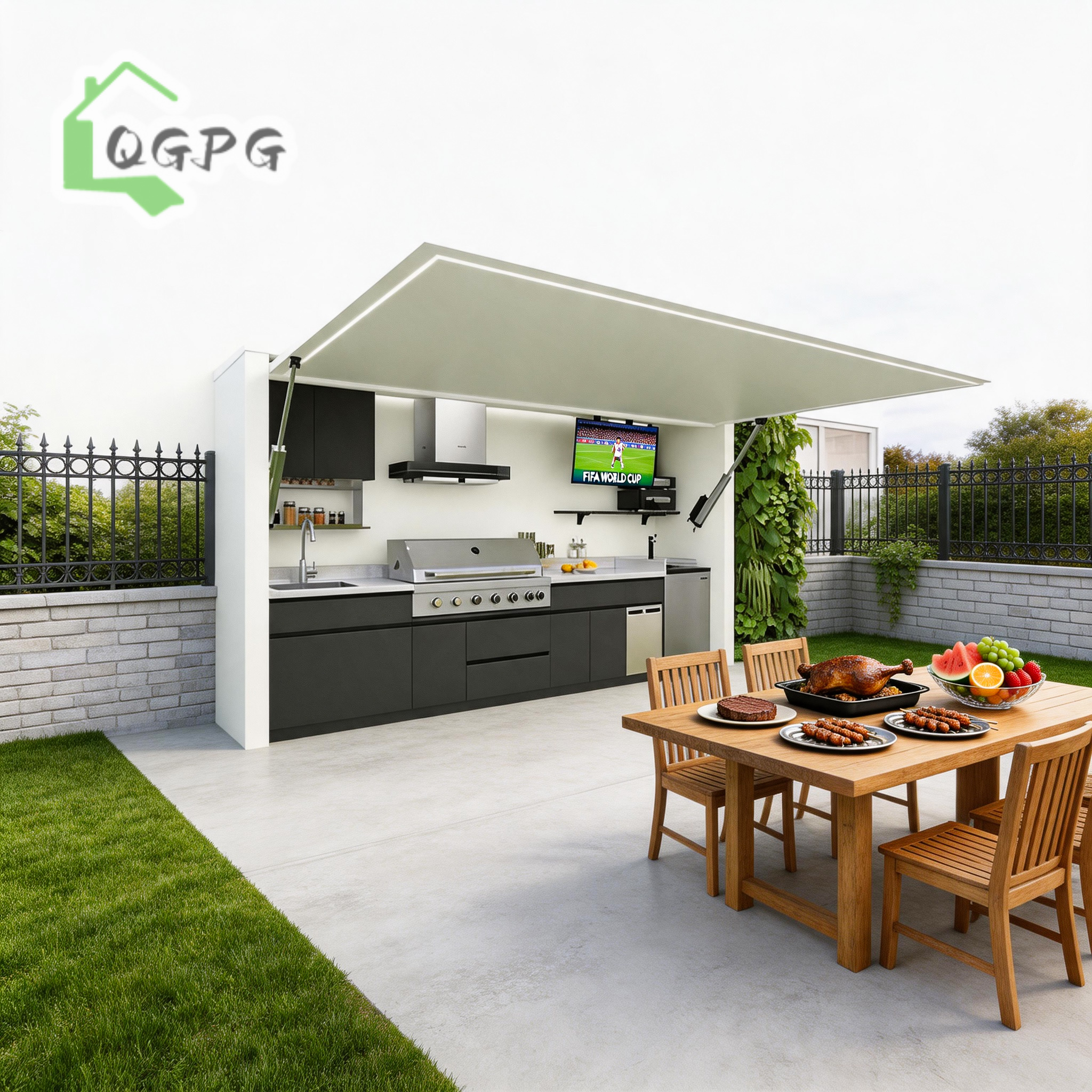
OEM direct-supplied all-in-one culinary station offering zero-assembly on site with complete climate sealing and secure locking.
Inquire Now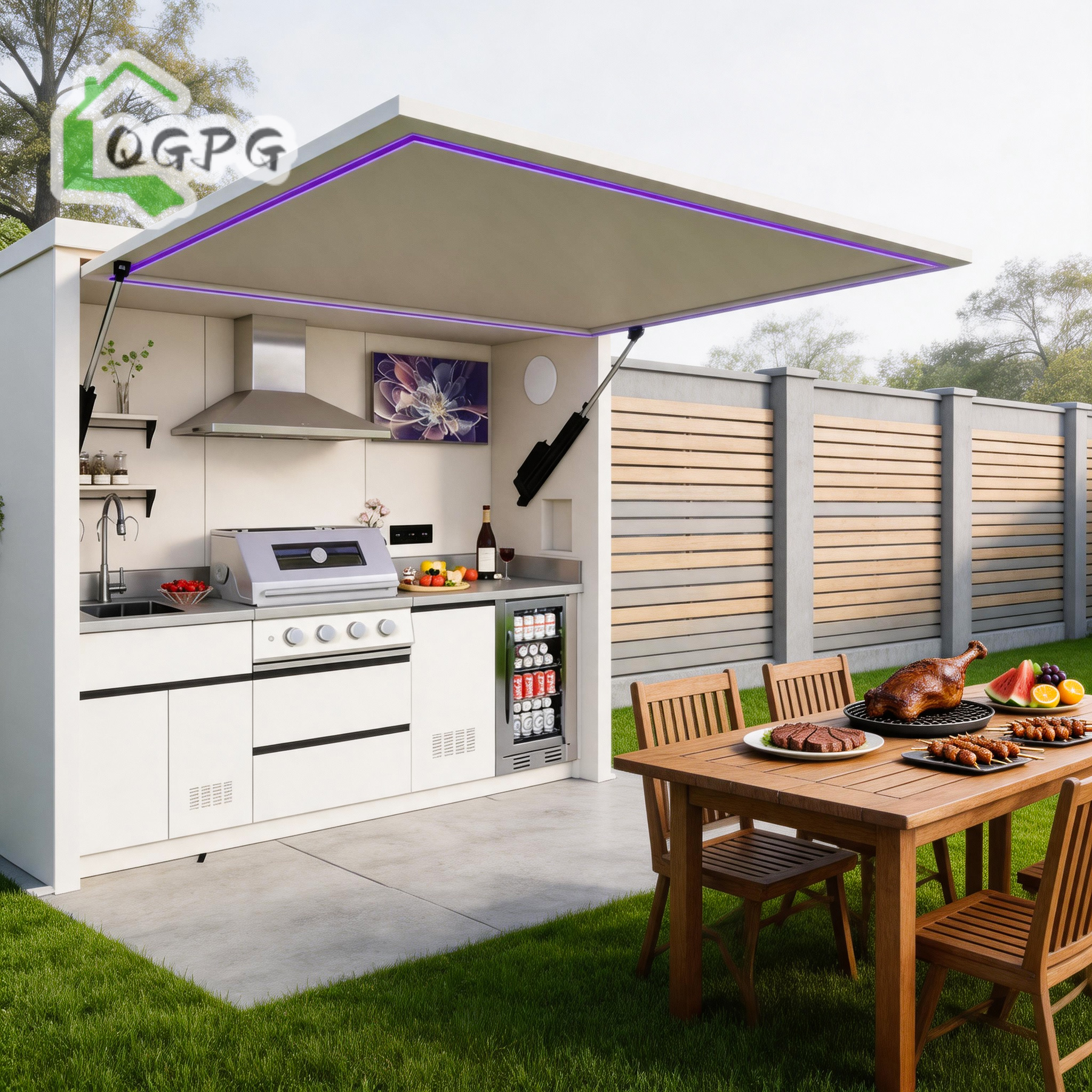
Commercial-grade heavy-duty hydraulic canopy designed for hotel resorts, catering businesses, and public recreation projects.
Inquire Now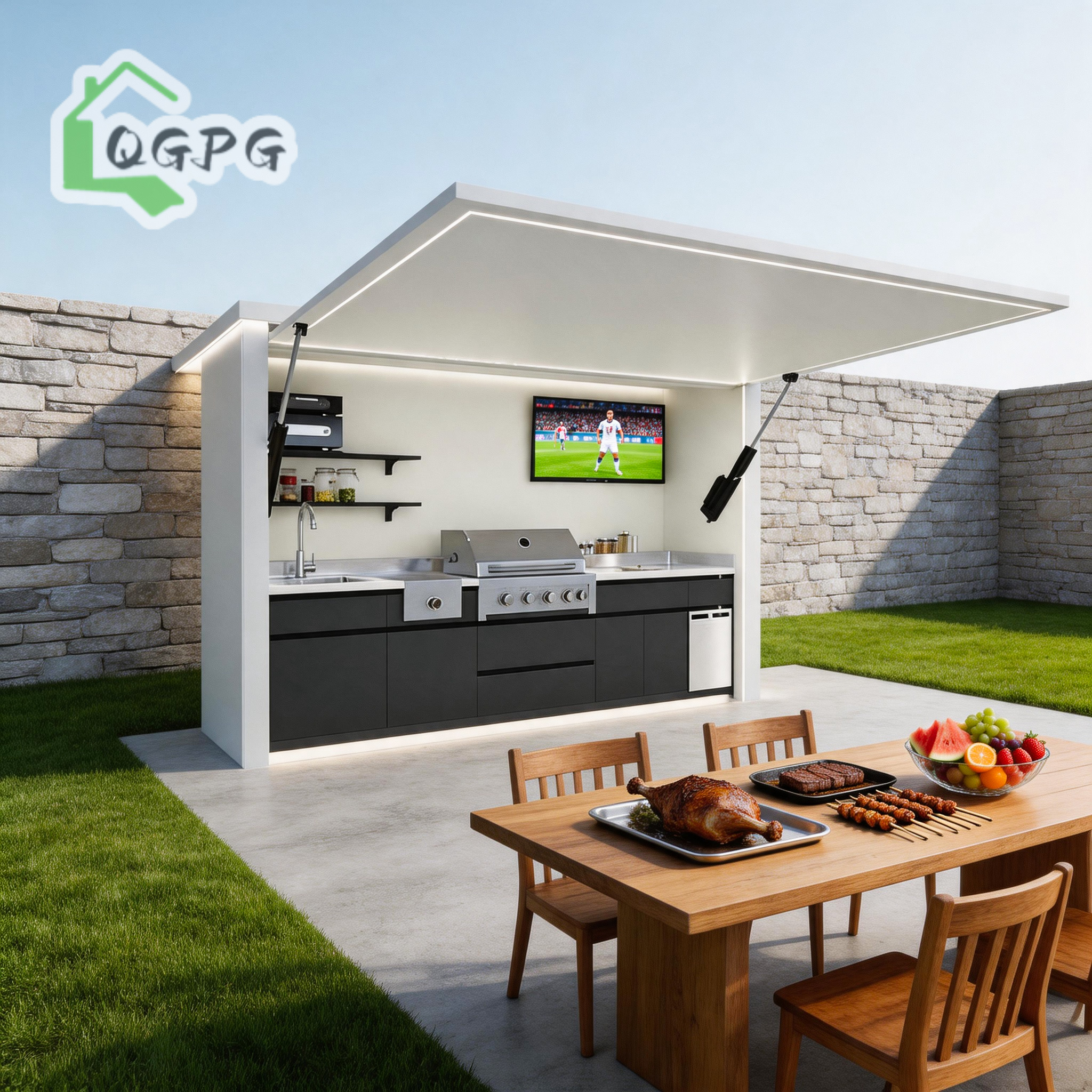
Electric-hydraulic automated opening mechanism paired with 304 SS, built-in dual-fuel grill, refrigeration, and sink module.
Inquire NowThe global modular construction market has evolved beyond simple converted ISO shipping containers into engineered, purpose-built expandable container systems. Traditional ISO conversions suffer from internal dimension restrictions, thermal bridging, and structural degradation when modified. Modern expandable container buildings utilize high-tensile galvanized steel chassis combined with articulated hinge mechanisms and hydraulic actuators, expanding a standard 20ft or 40ft transport footprint into a 3x larger usable space within 15 to 30 minutes of site positioning.
For B2B buyers—including residential developers, remote site camp managers, resort operators, and government procurement agencies—the key advantages stem from logistics efficiency. Shipping three fully functional rooms within a single closed intermodal shell significantly reduces ocean freight expenditures while delivering turnkey structural integrity.
Ships in a standard 2.2m-wide shipping envelope, expanding to 6.3m wide upon setup. Provides a 1:3 shipping-to-usable space ratio.
Integrates flame-retardant Polyurethane (PU) or high-density Rockwool core sandwich panels with structural thermal breaks (R-22 to R-32 ratings).
Engineered to withstand seismic force Zone 8 ratings, wind speed loads up to 120 km/h, and roof snow loads exceeding 1.5 kN/m².
To assist global procurement officers in conducting rigorous vendor audits, our engineering research team evaluated the primary manufacturing hubs across Asia, Europe, and North America based on production capacity, quality assurance, and technical customization capabilities.
| Manufacturer / Wholesaler | Primary Manufacturing Base | Core Specialty | Factory Verification | Customization Depth |
|---|---|---|---|---|
| Hebei BSU Building Materials Technology Co., Ltd. | Hebei, China | Custom Expandable Homes, Hydraulic Kitchen/BBQ Pods & Site Offices | Intertek Assessed | Full Custom CAD/BIM Layouts, Electrical & Plumbing to Destination Code |
| SG Blocks, Inc. | United States | ISO Code-Engineered Container Conversions | ESG / ISO Certified | Fixed Architectural Models |
| Portakabin Ltd. | United Kingdom | Modular Commercial Workspace & Modular Classrooms | BBA Certified | Modular Panel Selection |
| Falcon Structures | United States | Modified Industrial Storage & Mobile Office Units | ISO 9001 | Standardized Interior Fits |
| Boxman Studios | United States | Custom Experiential & Event Container Structures | Custom Fabricator | High Architectural Finish |
| Algeco Scandinavia | Europe | Temporary Accommodation & Site Camp Housing | CE / EN1090 | Standard Accommodation Blocks |
| Container Build Group | Australia | BAL-Rated Off-Grid Expandable Homes | HIA Member | Custom Residential Finishes |
| CGCH Container House Co. | Guangdong, China | Flat Pack & Basic Foldable Site Cabins | SGS Audited | Mass-Production Standard Models |
| K-Home Steel Structure | Henan, China | Low-Cost Workforce Labor Camp Housing | ISO 14001 | Standard Module Configuration |
| Magic Green Modular | Zhejiang, China | Glamping Pods & Solar Integrated Cabins | CE Certified | Prefab Aesthetic Shells |
Global supply chains and environmental regulations are shifting procurement priorities. Key macro-trends shaping the 2025-2030 sourcing roadmap include:
Manual winches and hand-crank expansion mechanisms are rapidly being replaced by integrated 24V DC hydraulic lift cylinders and linear actuators. These allow a single technician to open a 40ft triple-expansion container structure via remote control in under 10 minutes, eliminating heavy site-rigging equipment costs.
For coastal resorts, offshore mining operations, and high-humidity environments, standard mild steel frames are giving way to 304 and 316 Marine-Grade Stainless Steel chassis. Combined with fluorocarbon (PVDF) dynamic powder coatings, these structural frames resist salt spray corrosion for over 25 years.
B2B buyers now demand fully factory-pre-installed MEP systems certified to destination codes (such as UL/CSA for North America, CE for Europe, and AS/NZS 3000 for Australia). PEX-A plumbing networks, pre-wired conduit channels, and integrated greywater filtration units reduce on-site trade labor by up to 80%.
Integrating ultra-lightweight flexible monocrystalline solar panel arrays directly onto the expandable roof wings allows these units to operate autonomously. High-performance Aerogel and Polyisocyanurate (PIR) insulation panels maintain interior thermal comfort in extreme ambient ranges (-30°C to +55°C).
As verified by Intertek on-site auditing, Hebei BSU Building Materials Technology Co., Ltd. operates state-of-the-art modular fabrication facilities in Hebei Province, China. Unlike trading brokers, BSU maintains complete in-house control over steel cutting, robotic welding, sandwich panel lamination, hydraulic system integration, and final export packing.
Every unit undergoes structural load testing, rain-chamber waterproof testing (30 kPa high-pressure spray for 4 hours), and electrical continuity verification prior to ocean shipment loading.
BSU's 80+ structural engineers and technicians draft customized 3D BIM models, accommodating specific wind load calculations, insulation R-value targets, and interior space planning.
Essential guidance for procurement directors, project managers, and wholesalers sourcing expandable container buildings internationally.
Partner directly with a verified custom manufacturer. Get detailed engineering CAD drawings, factory-direct wholesale pricing, and customized project proposals within 24 hours.