Factory Direct Supply
Featured Marine-Grade & Stainless Modular Units
Precision-manufactured in China under Intertek-assessed production standards. Designed for rapid deployment across Tuvalu's nine coral atolls with maximum resistance to saltwater fog and humidity.
Engineering Whitepaper
Modular Architecture in Low-Lying Island Environments: Engineering Strategies for Tuvalu
Tuvalu, composed of nine low-lying coral atolls in the West-Central Pacific Ocean (including Funafuti, Nanumea, Nukufetau, and Vaitupu), presents one of the most demanding environmental operational theaters for structural engineering and civil construction. With an average elevation of less than 2 meters above sea level, intense salt-fog mist, extreme atmospheric humidity, and frequent cyclonic storm surges, traditional construction materials face rapid degradation. Conventional timber frames succumb to termite infestations and humidity rot, while standard reinforced concrete suffers from severe rebar spalling caused by chloride ingress through porous coral aggregate sand.
As a leading China wholesale modular container house factory and custom exporter, Hebei BSU Building Materials Technology Co., Ltd. has engineered a dedicated series of prefabricated container houses, expandable cabins, flat-pack workforce accommodation units, and modular utility pods specifically tailored to address the acute geo-climatic realities of Tuvalu and the surrounding Pacific Island region.
ISO 12944 C5-M Anti-Corrosion Protection
To withstand the high-salinity marine boundary layer, our container structural frames utilize hot-dip galvanization with zinc coating densities exceeding 275 g/m², combined with fluorocarbon (PVDF) or epoxy-polyester powder topcoats. Exposed exterior hardware uses SUS304 or SUS316 marine-grade stainless steel to ensure a minimum 25-year structural service life.
Category 5 Cyclonic Wind Resistance
Tropical cyclones regularly track through the South Pacific basin. BSU modular houses feature heavy-gauge cold-formed structural steel profiles engineered according to AS/NZS 1170.2 standards, capable of sustaining dynamic wind loads up to 250 km/h (Class C4/C5 Typhoon rating) when anchored to concrete strip foundations or ground screws.
Thermal Comfort & High-R Insulation
Tuvalu’s equatorial marine climate demands superior thermal regulation. Our walls utilize high-density Polyurethane (PU / PIR) or non-combustible Rockwool core sandwich panels with thermal break framing. Combined with reflective Low-E double-glazed glass windows, solar heat gain coefficient (SHGC) is reduced by up to 65%.
Structural Engineering Specifications for Atoll Deployment
Navigating the supply chain to Funafuti Port requires optimizing cargo freight density while guaranteeing simple on-site assembly. Flat-pack modular container units allow 4 individual units to be packed into a single 40ft High Cube (40HQ) ocean container, significantly reducing sea freight overhead from Chinese ports (Tianjin, Qingdao, Ningbo, Shanghai) via transshipment hubs in Fiji (Suva) to Tuvalu.
| Modular System Type | Core Structural Spec | Insulation & Fire Rating | Tuvalu Shipping / Freight Efficiency | Ideal Island Application |
|---|---|---|---|---|
| Expandable Container House | 2.5mm Hot-dip galvanized frame, dual wing fold-out layout | 75mm PIR Sandwich Panel / Class B1 Flame Retardant | 1 unit per 40HQ (Delivered ~90% pre-fitted inside) | Residential Housing, Eco-Resort Cabins, Executive Offices |
| Flat Pack Container House | Bolted corner column fittings, 3.0mm galvanized steel beam | 50mm/75mm Rockwool Core / Class A Non-combustible | 4 units stacked into 1x 40HQ bundle (75% freight cost reduction) | Workforce Camps, Public Schools, Disaster Relief Dorms |
| Folding Container House | Integrated hinged steel chassis, automated setup linkage | 50mm Fireproof IEPS or PU Insulation | 10-12 units per 40HQ ocean container | Emergency Shelters, Fast-deployment Guard Posts, Storage |
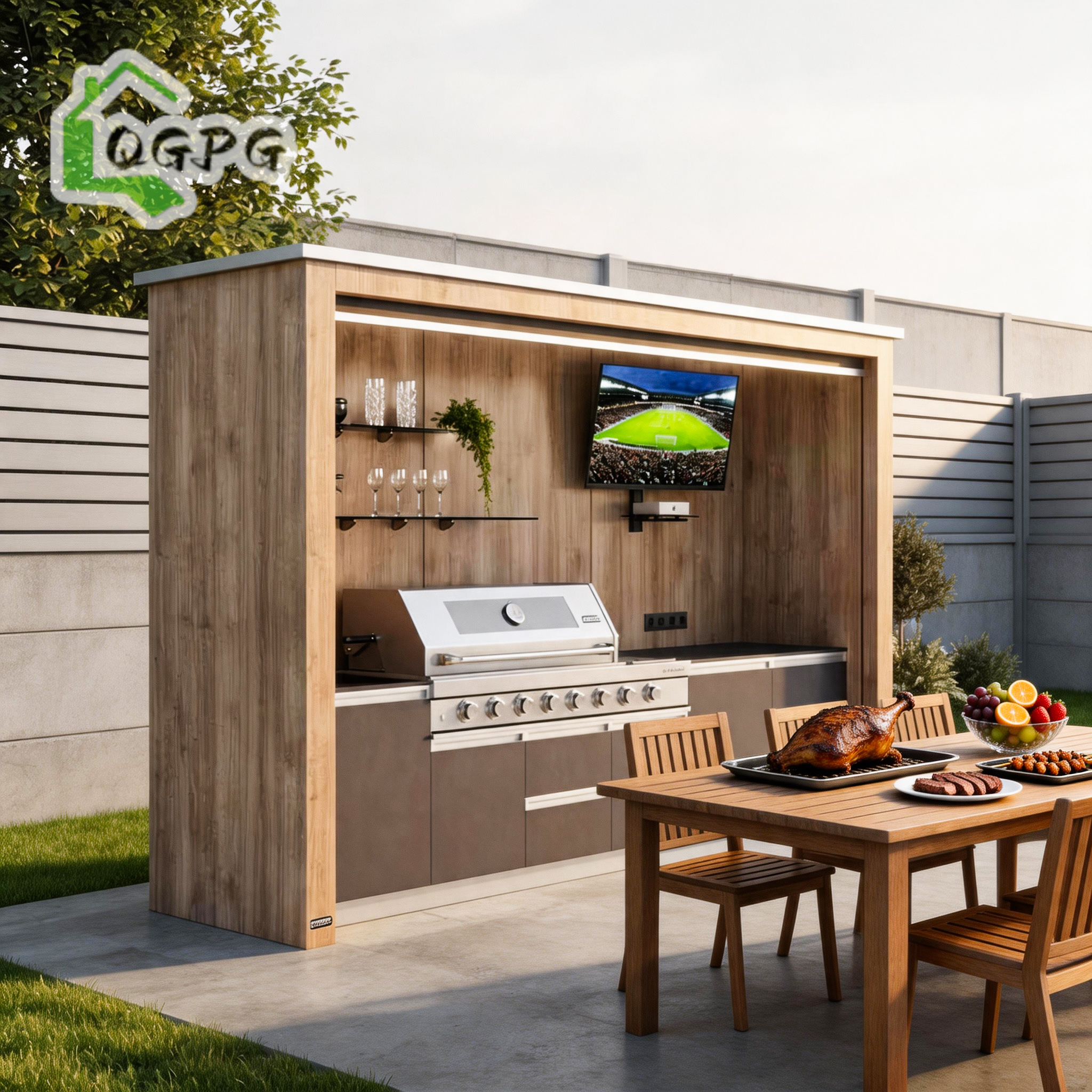
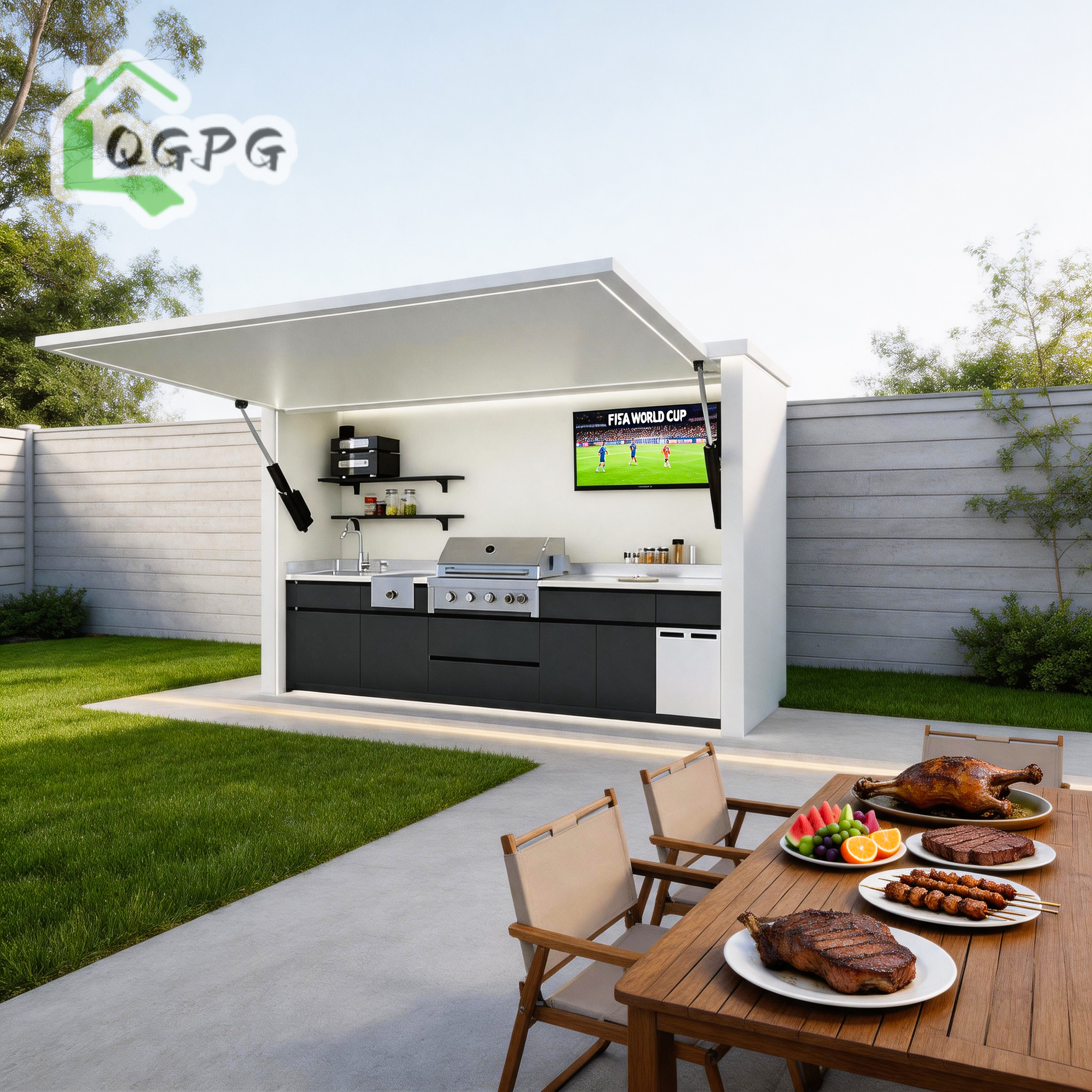
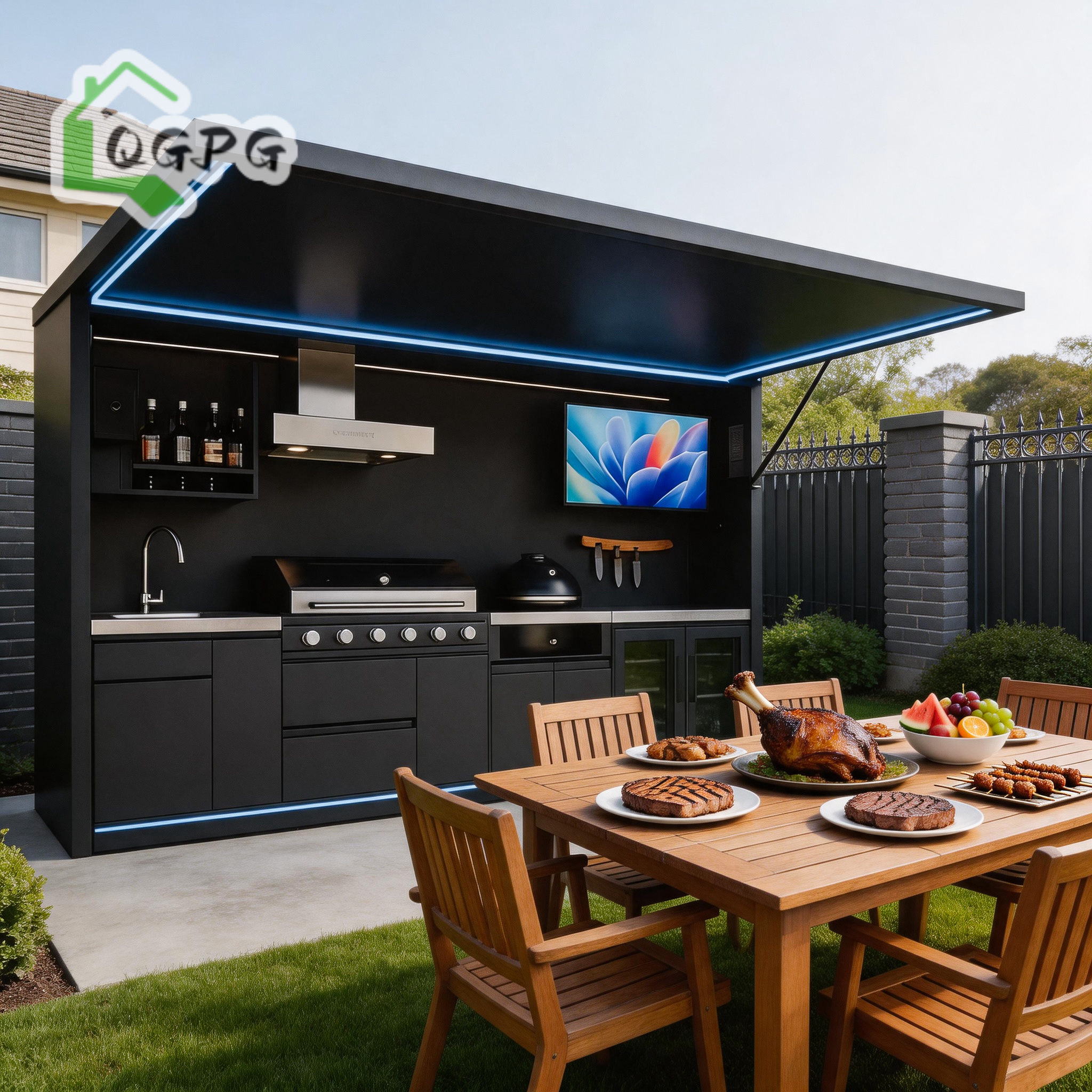
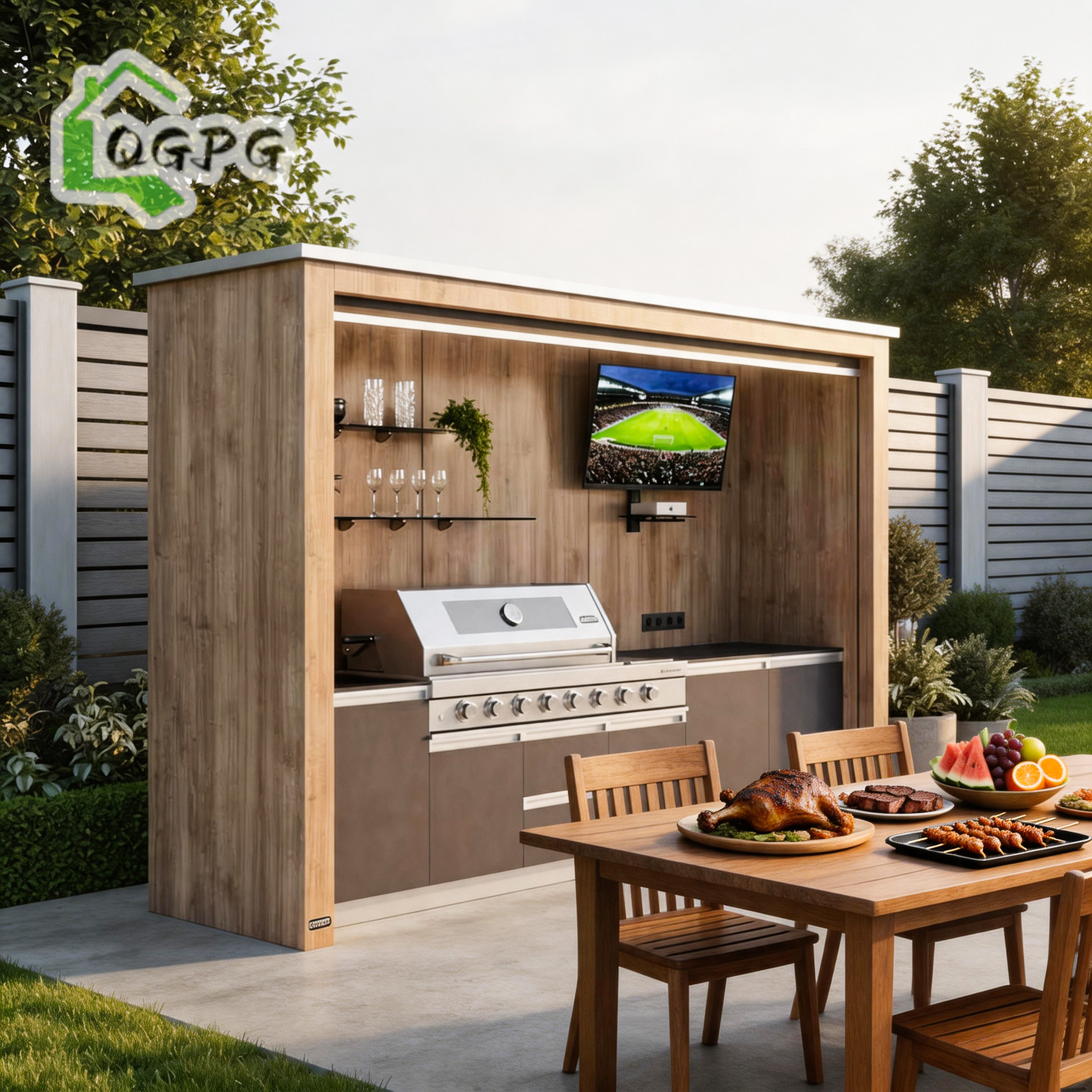
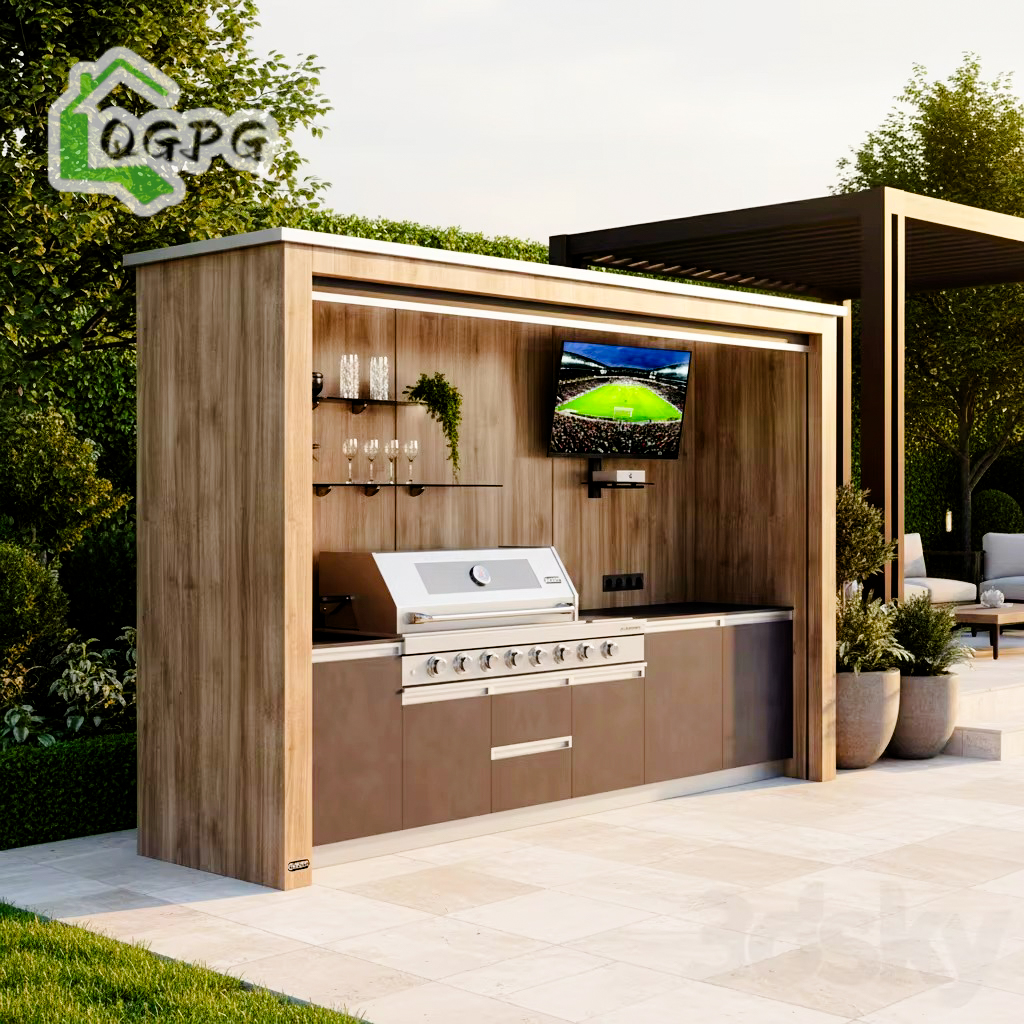
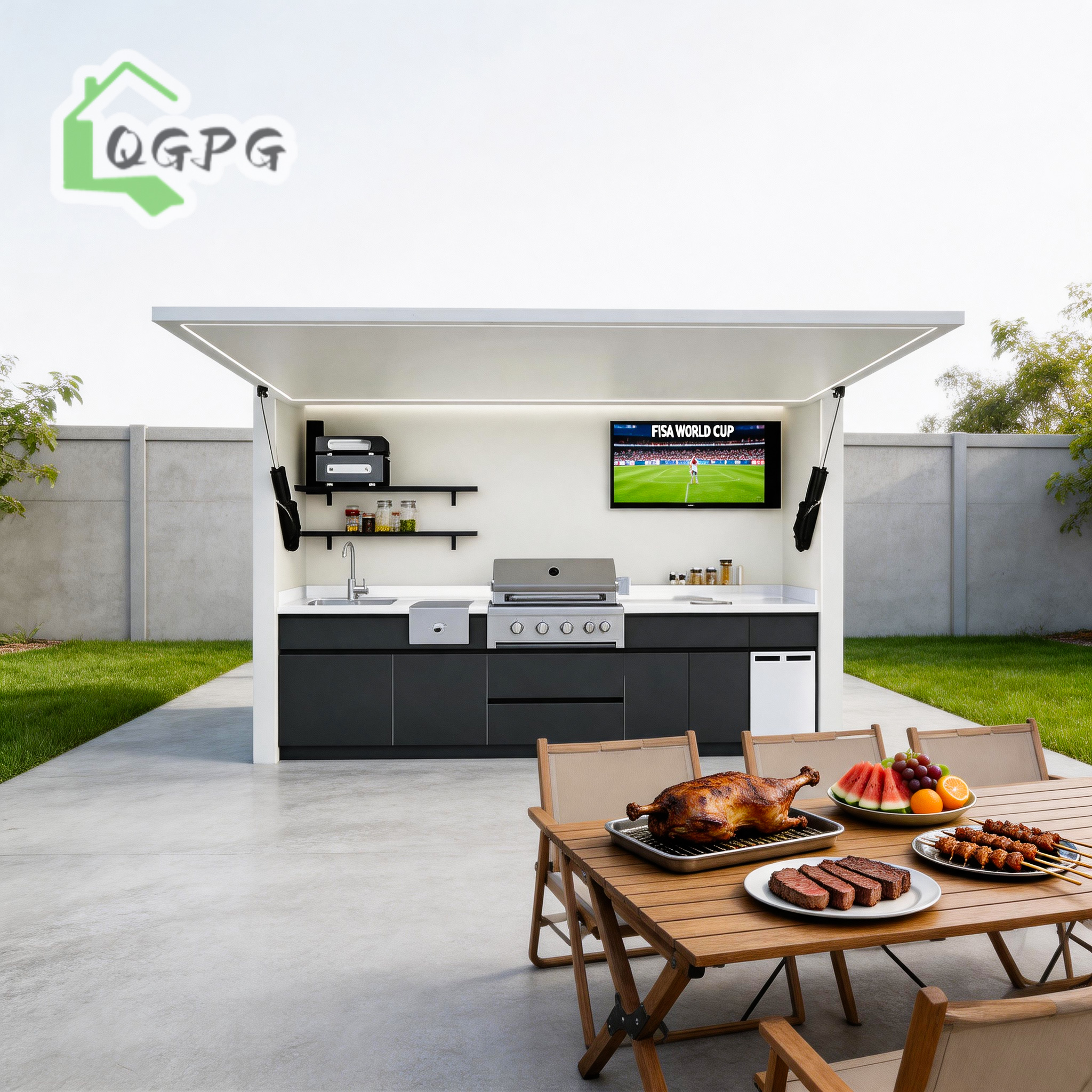
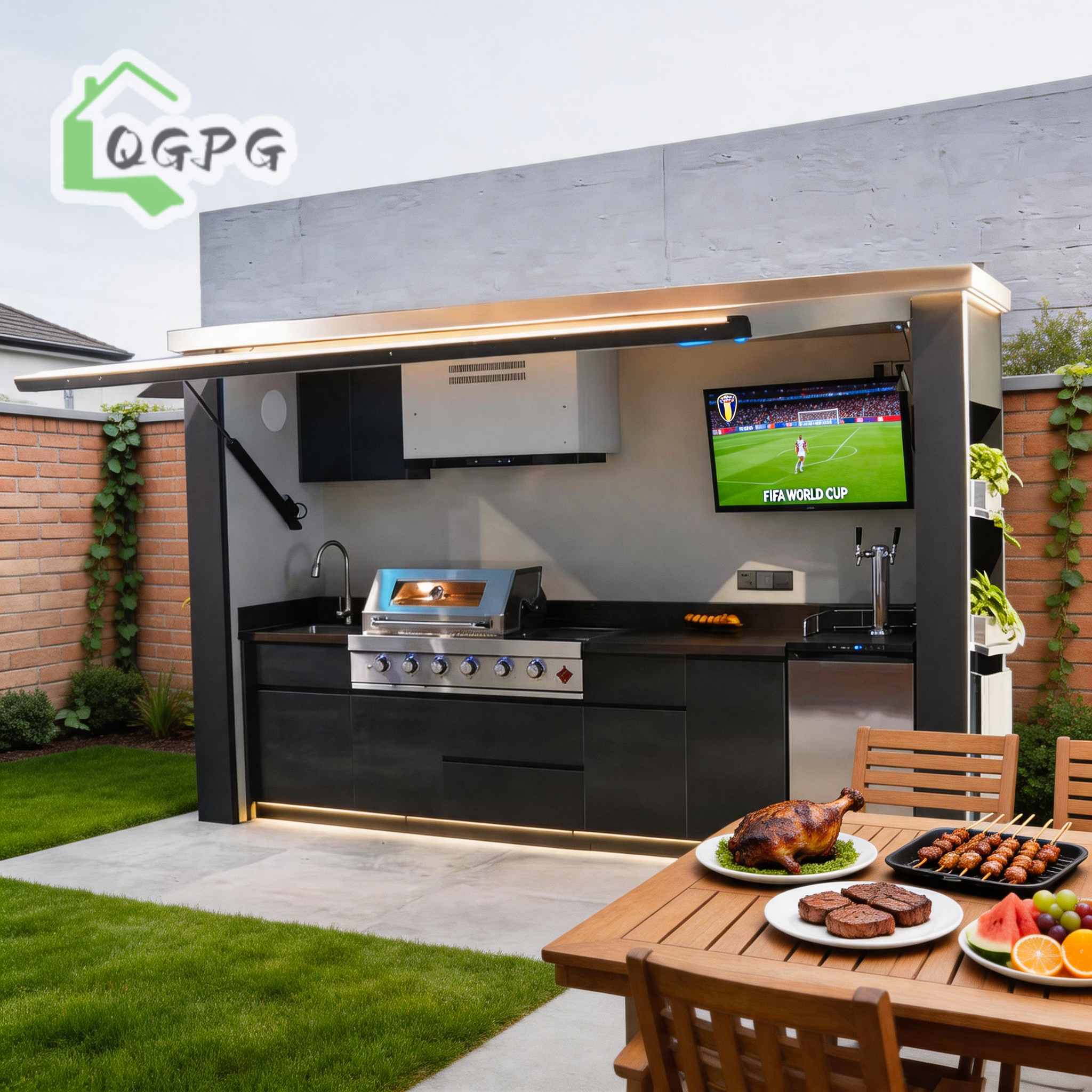
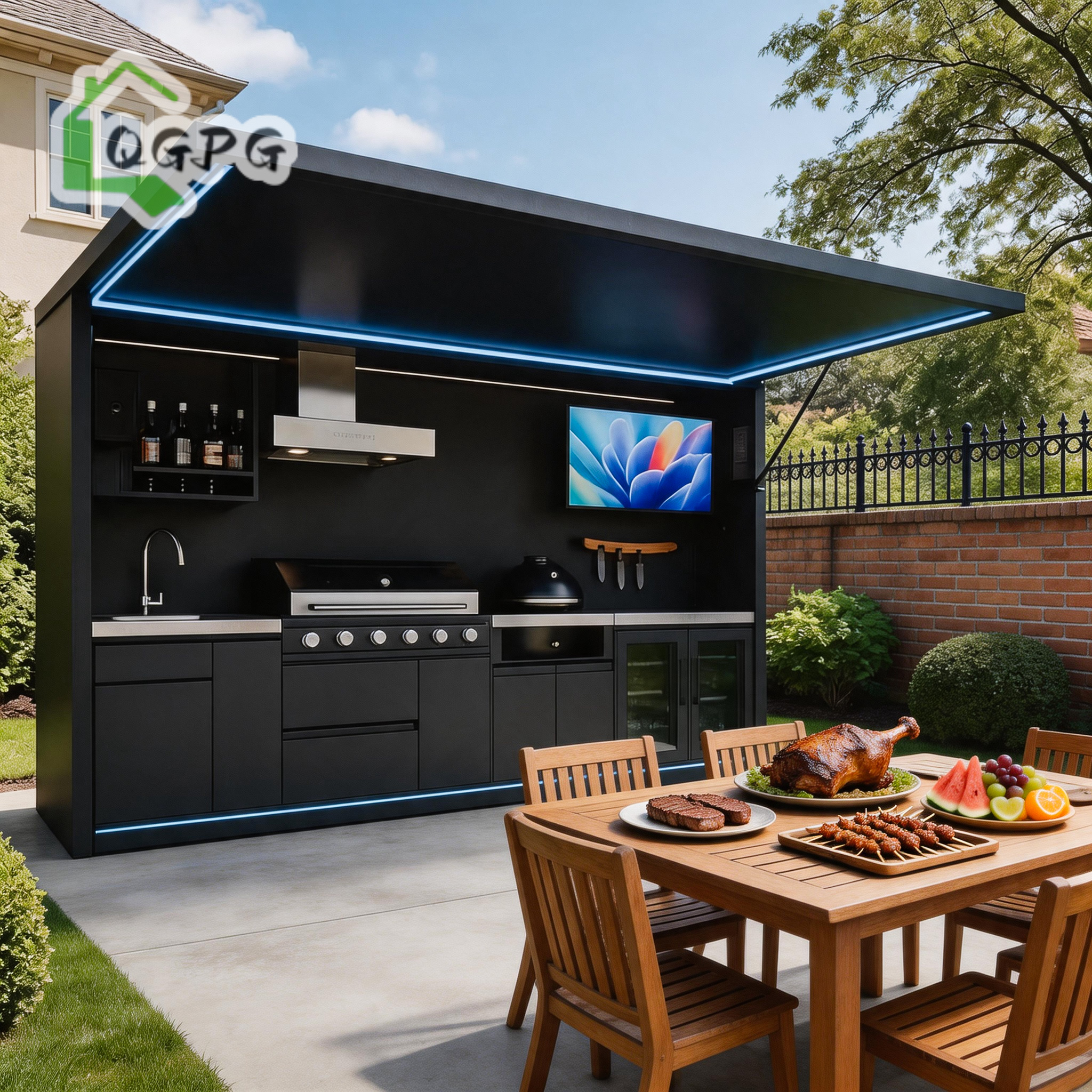
| Stainless Kitchen & Utility Pod | SUS304 / Marine Grade SUS316 Structural Enclosure | Double-skin insulated stainless panels with hydraulic canopy | 1 unit per 20GP / 40HQ custom cradled shipment | Resort Dining Modules, Commercial Camp Catering, Outdoor Kitchens |
Localized Applications
Tailored Modular Deployment Across Tuvaluan Atolls
From urbanization pressure in Fongafale (Funafuti) to remote infrastructure development in outer islands, our pre-engineered modular buildings provide instant, flood-resilient physical space.
1. Coastal Eco-Resorts & Hospitality Cabins
Tuvalu’s sustainable tourism strategy requires low-impact, non-permanent hospitality architecture. Expandable container units and customized 304 stainless steel outdoor kitchen/bbq pods offer luxury eco-resorts on Funafuti Lagoon high-end modern amenities without permanent concrete foundation scars on delicate coral environments. Raised pilings prevent king tide inundation while maintaining panoramic ocean aesthetics.
2. Rising Sea Level Resilient Residential Housing
With tidal surges ("King Tides") routinely washing over low-lying ground, BSU modular homes are engineered to be mounted on elevated steel elevated stilts or helical ground screw anchor foundations (1.0m to 1.8m above ground level). This creates a safe living area while allowing floodwaters to pass beneath unimpeded without structural undermining.
3. Institutional Public Works & Telecommunication Hubs
Government infrastructure projects on outer atolls (such as Vaitupu, Nanumanga, and Niutao) face strict logistics timelines due to inter-island barge capacities. BSU flat-pack site offices and utility pods ship completely disassembled or flat-stacked, allowing easy unloading onto small jetties without requiring 50-ton heavy industrial cranes.
4. Off-Grid Self-Sustaining Sanitation & Kitchen Modules
Freshwater scarcity is a critical challenge in Tuvalu. Our integrated modular container roofs feature custom perimeter rainwater harvesting channels that direct 100% of rainwater runoff into high-capacity filtration storage bladders. Combined with solar PV rooftop mount kits and pre-wired 220V/50Hz Australian/Pacific standard wiring, units operate completely off-grid.
Market Insights
Pacific Island Modular Construction Trends: 2025-2030
The construction industry across the Small Island Developing States (SIDS) of the Pacific is undergoing a rapid paradigm shift from traditional, slow wet-construction (concrete block casting) to off-site pre-fabricated industrial steel modularism. Key drivers transforming procurement strategies in Tuvalu include:
- Elimination of Local Aggregate Degradation: Traditional construction in Tuvalu reliance on beach sand mining exacerbates coastal erosion and leads to early structural concrete degradation due to salt contamination. Prefabricated steel container modules eliminate the need for local sand or gravel aggregates entirely.
- Zero-Concrete Foundation Systems: The adoption of galvanized helical screw piles allows container modules to be securely locked into coral bedrock within hours, drastically reducing construction timelines and site environmental disturbance.
- Off-Grid Renewable Integration: With fuel imports expensive and environmentally hazardous, newly imported modular container buildings are increasingly required to incorporate pre-engineered rooftop PV solar rack mounting, battery storage cabinets, and low-wattage DC inverter air conditioning systems.
- Disaster Relief & Climate Adaptation Funds: Funding agencies (including ADB, World Bank, and UN climate adaptation programs) prioritize modular building suppliers capable of delivering certified structural anti-corrosion documentation, rapid deployment capabilities, and transparent factory quality assurance.
Verified Manufacturer Expertise
Why Choose Hebei BSU Building Materials Technology Co., Ltd.?
Sourcing directly from a verified, custom China wholesale factory eliminates intermediate trading markups while guaranteeing strict adherence to material quality control standards. Hebei BSU operates a modern manufacturing facility assessed on-site by Intertek, employing over 80 verified technical staff, structural engineers, and certified export QA inspectors.
Intertek Verified Factory Audit
Our production facilities, laser cutting machinery, automated welding lines, and financial standing have undergone thorough third-party physical audit inspection by Intertek, assuring international procurement safety.
Custom Engineering & CAD Drawing Approval
We do not just supply off-the-shelf units. Our engineering team prepares full structural, electrical layout, and plumbing CAD drawings according to your site dimensions, local electrical standards (220-240V), and aesthetic preferences before cutting steel.
Comprehensive Ocean Export Packing
All component packages feature protective anti-static moisture barriers, corner corner-guards, and heavy-duty steel cradling engineered to prevent ocean cargo damage during transit across rough Pacific sea routes.
Procurement FAQ
Frequently Asked Questions for Tuvalu Sourcing
Direct technical answers addressing logistics, ocean freight, assembly, durability, and customization for buyers in Tuvalu and the South Pacific.
How are modular container houses shipped to Port of Funafuti, Tuvalu?
Shipments are routed from main Chinese export ports (Tianjin, Qingdao, Ningbo, or Shanghai) via regional feeder routes, often transshipping through Suva, Fiji, prior to final discharge at Funafuti Port. Flat-pack and folding container units are bundled into standardized ISO dimensions (or packed inside standard 40HQ containers) to ensure full compatibility with Pacific feeder vessel container cranes and local unloading gear.
How do BSU modular buildings withstand severe saltwater rust and high ocean air corrosion?
We apply a multi-tier corrosion protection protocol. All structural steel framing undergoes heavy hot-dip galvanization (minimum 120g-275g/m² zinc layer), followed by a marine-grade epoxy primer and UV-stabilized fluorocarbon topcoat compliant with ISO 12944 C5-M specifications. Wall panels use pre-painted galvanized steel (PPGI) skins or SUS304 stainless steel hardware to prevent oxidation in high-salinity island air.
Can the container structures be safely elevated off the ground to prevent flood damage from King Tides?
Yes. Our structural chassis engineered with integrated ISO heavy corner fittings that lock directly onto raised concrete piers, elevated structural steel stilts, or ground screw helical pile anchors (ranging from 0.5m to 2.0m height above natural ground level). This ensures full elevated clearance against ocean storm surges and tidal swelling.
Is heavy crane equipment required for assembling these units on remote outer islands?
Not necessarily. While expandable container units require a light crane or hiab crane truck for unfolding, our **Flat Pack** and **Folding Container** product lines can be easily erected using manual hand winches, basic scaffolding, and standard power tools. This makes them exceptionally suited for outer atolls with limited heavy lifting machinery.
Are electrical and plumbing systems configured to Pacific/Australian standards?
Yes. All pre-installed electrical wiring, breakers, switches, and power outlets are configured to 220V-240V / 50Hz single-phase or three-phase AS/NZS specifications (Type I electrical plugs used in Tuvalu, Fiji, Australia, and New Zealand). Plumbing pipes use standard AS/NZS compliant PPR/PEX pressure lines and PVC drainage fittings.
What is the typical production and delivery lead time for wholesale orders?
Standard modular unit manufacturing lead time is typically 15 to 20 days from final CAD drawing sign-off. Ocean transit time from Chinese main ports to Funafuti via Fiji transshipment generally ranges between 25 to 35 days depending on shipping line feeder schedules.
Start Your Tuvalu Prefabricated Container Project Today
Consult with our structural engineering team for customized CAD layouts, wind-load calculations, anti-corrosion material selections, and direct sea freight quotation to Port of Funafuti.