Featured Modular & Portable Outdoor Units
Precision-Engineered 304 Stainless Steel & Structural Steel Assemblies Designed for European Climates
German Market Analysis: The Shift Toward Structural Prefabrication
The demand for modular, portable, and tiny residential buildings across the Federal Republic of Germany (Bundesrepublik Deutschland) is undergoing a major structural expansion. Driven by rising urban land prices in hubs like Munich, Frankfurt, Berlin, and Hamburg, alongside strict energy efficiency directives (such as the updated Gebäudeenergiegesetz - GEG 2024), institutional developers, resort operators, and private landowners are seeking off-site engineered modular alternatives.
To legally operate or install a tiny house, modular site office, or auxiliary outdoor living pod in Germany, the structure must bridge two major legal hurdles: Statische Berechnung (Structural Engineering Verification) under Eurocode 3 (DIN EN 1993) and EnEV/GEG Thermal Performance Standards. As a primary manufacturer based in Hebei, China, Hebei BSU Building Materials Technology Co., Ltd. engineer units specifically designed to meet these exact European requirements. By utilizing cold-formed galvanized structural steel frames combined with high-density polyisocyanurate (PIR) core sandwich panels, BSU units eliminate thermal bridges and withstand heavy Northern European snow loads ($s_k \ge 1.8 \text{ kN/m²}$) and coastal wind loads (Zone 4 per DIN EN 1991-1-4).
Localized Application Scenarios in the German Market
Engineered Solutions for Municipal, Commercial, Tourism, and Private Developments
Schrebergarten & Kleingarten Installations
Compliance with the Bundeskleingartengesetz (BKleingG) requires strictly limited indoor footprints (maximum 24m² including covered terrace). BSU's custom tiny house and outdoor canopy pods offer compact, non-permanent foundations (Punktfundament) that respect statutory land usage rules while introducing modern off-grid luxury.
Eco-Glamping & Alpine Tourism Resorts
From the Bavarian Alps to the Baltic Sea coast, resort operators require year-round weatherproof guest pods. BSU’s expandable and hydraulic canopy units feature double-sealed EPDM gaskets, vapor barriers (DIN 4108-3), and integrated heating conduit channels for extreme winter conditions.
Urban Micro-Living & Rooftop Infill (§34 BauGB)
Urban densification in metropolitan areas relies on lightweight structural frames that can be crane-lifted onto existing concrete structures or positioned in narrow backyards under § 34 BauGB (Zulässigkeit von Vorhaben innerhalb der im Zusammenhang bebauten Ortsteile).
Commercial Gastronomy & Hospitality Pods
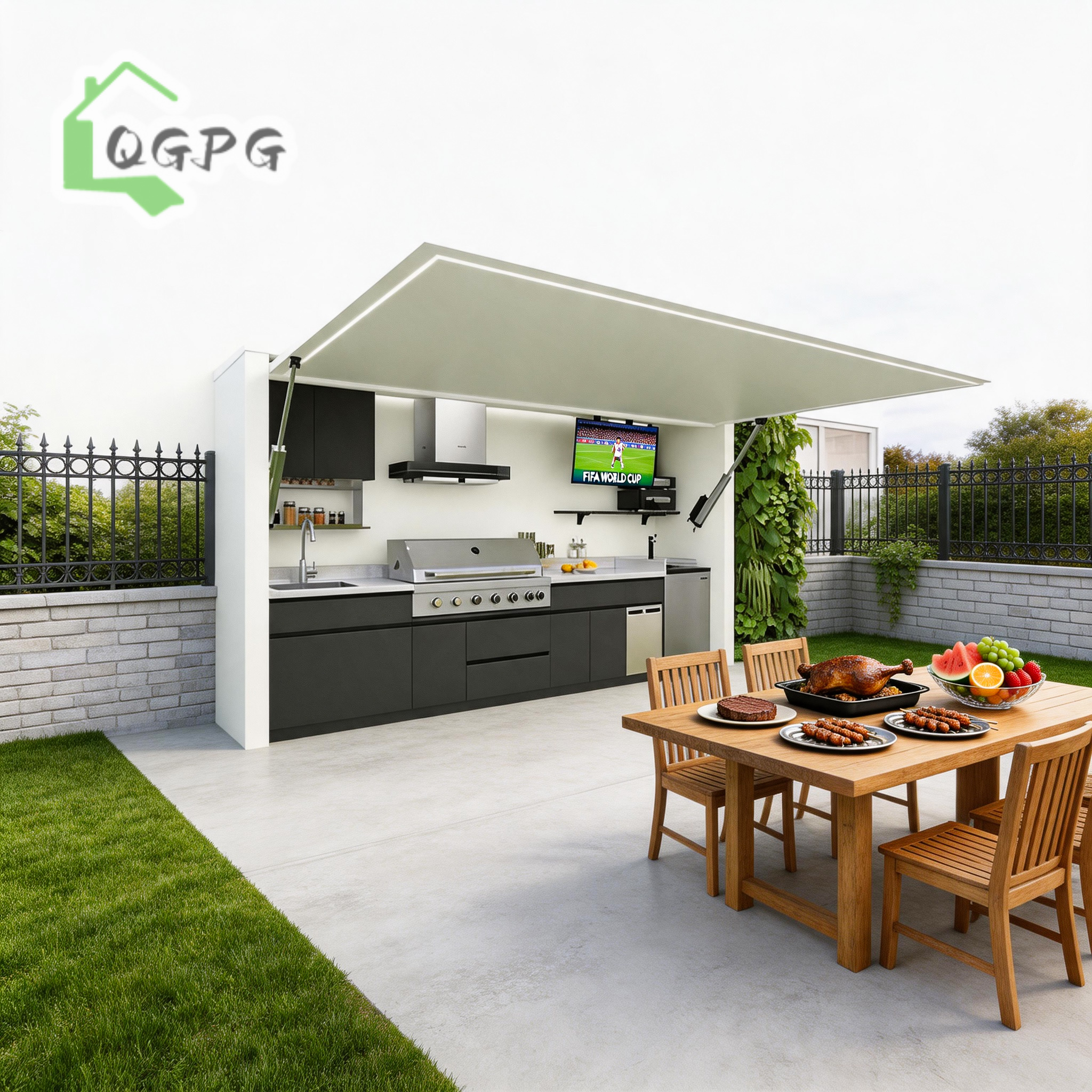
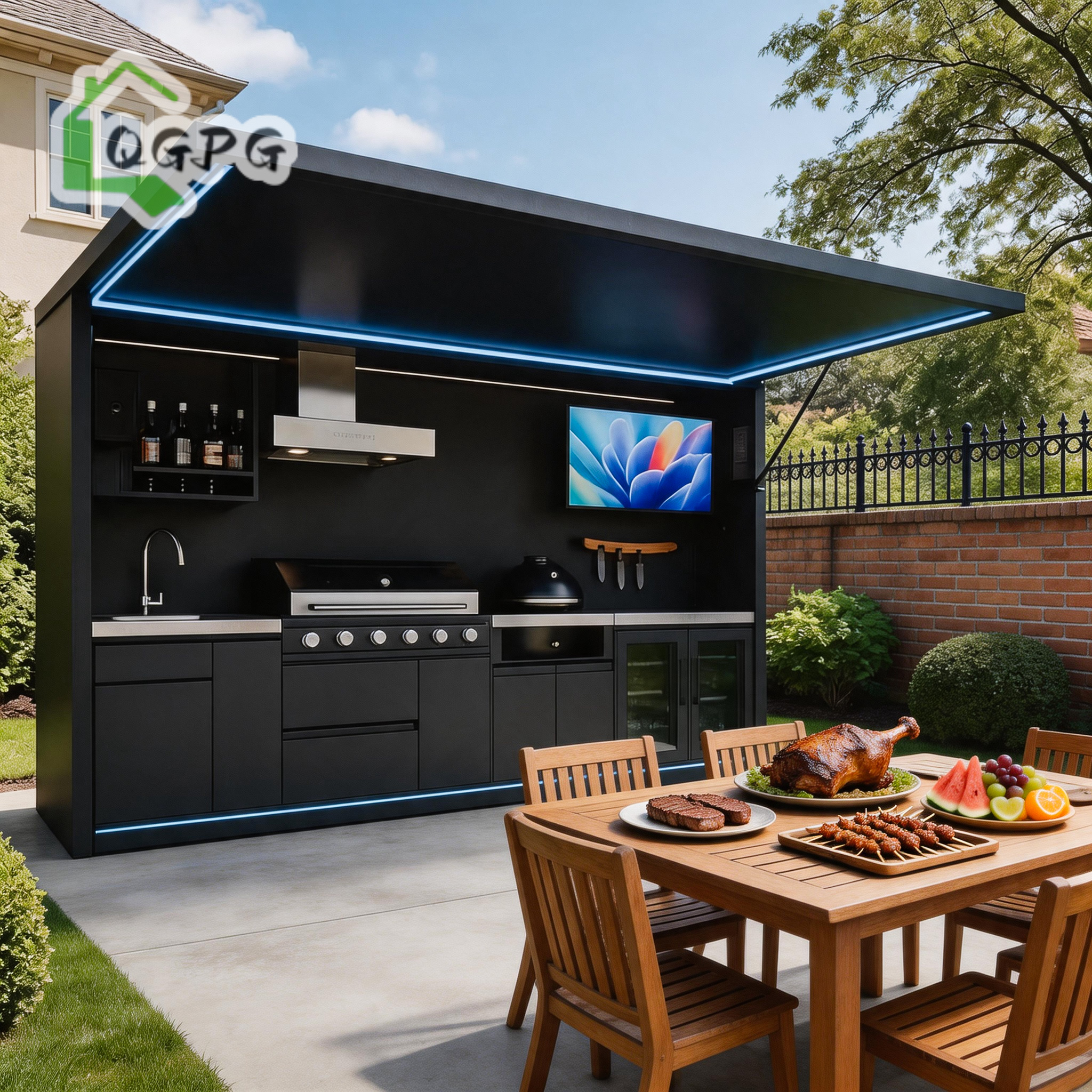
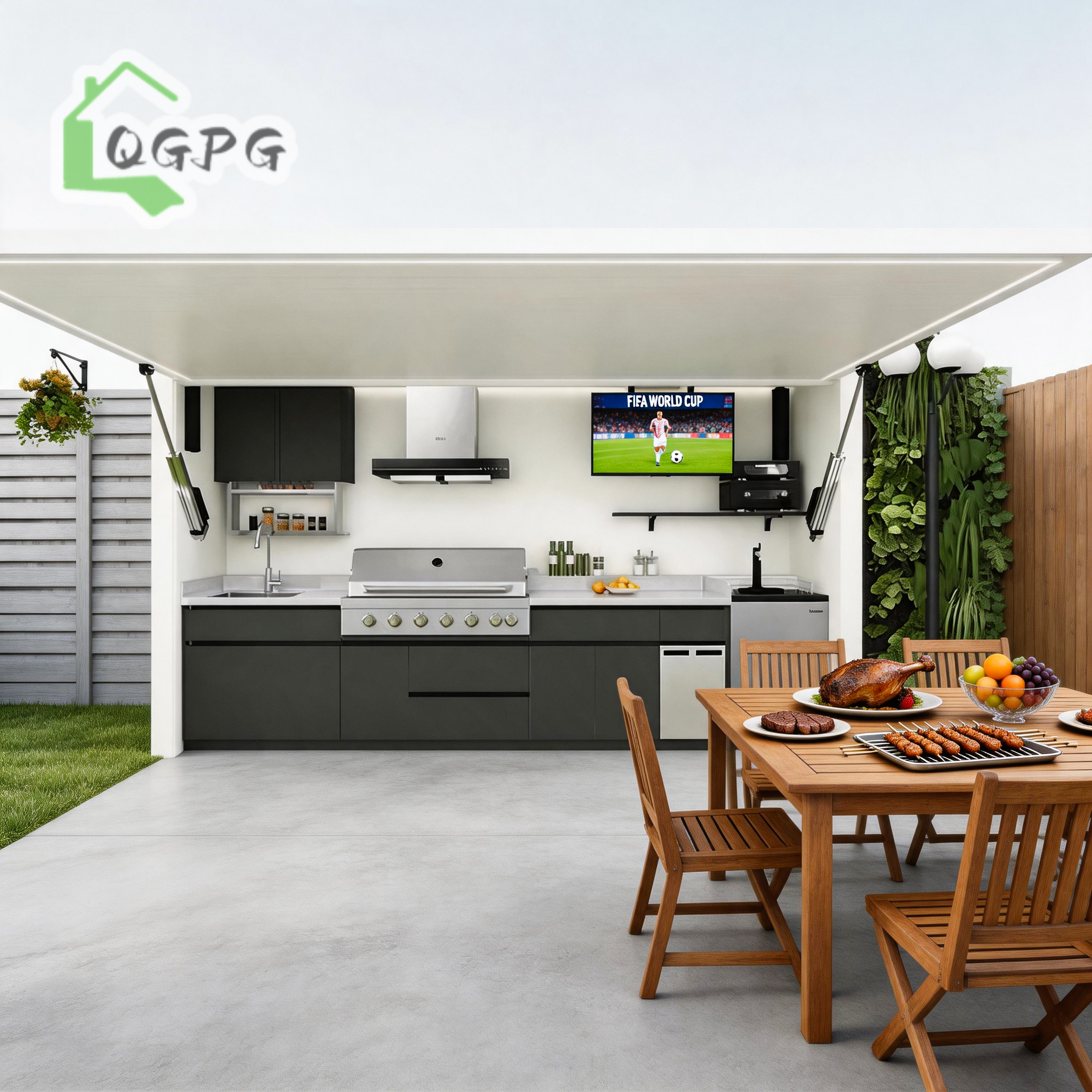
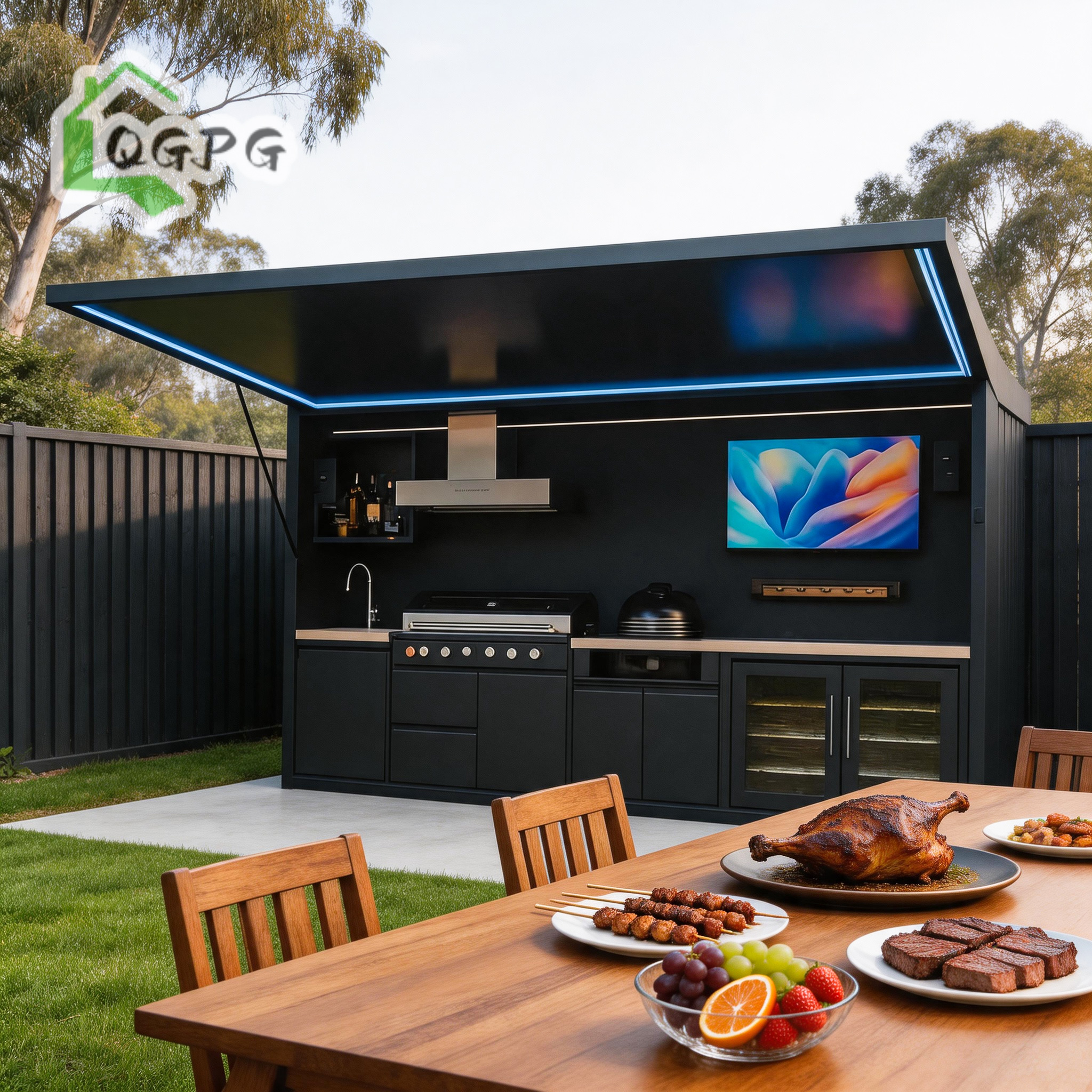
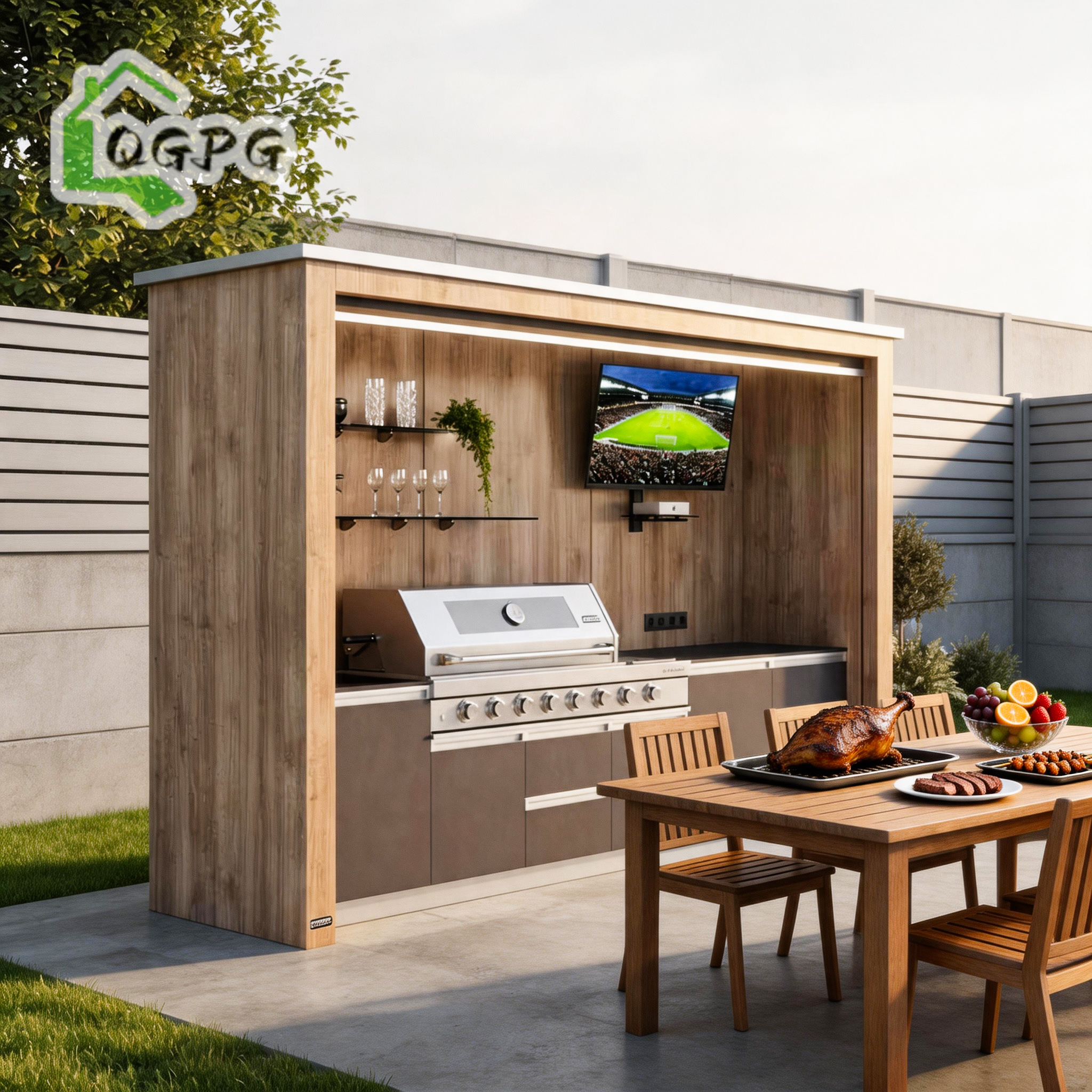
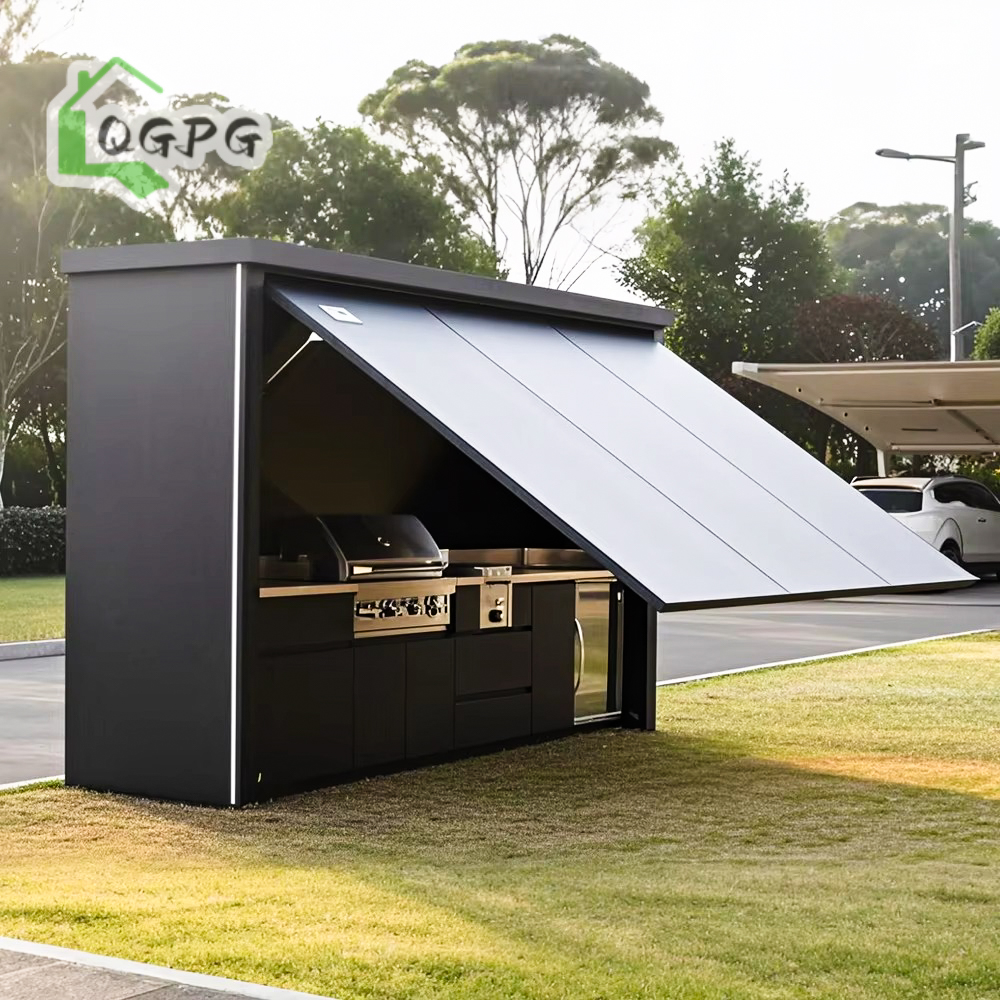
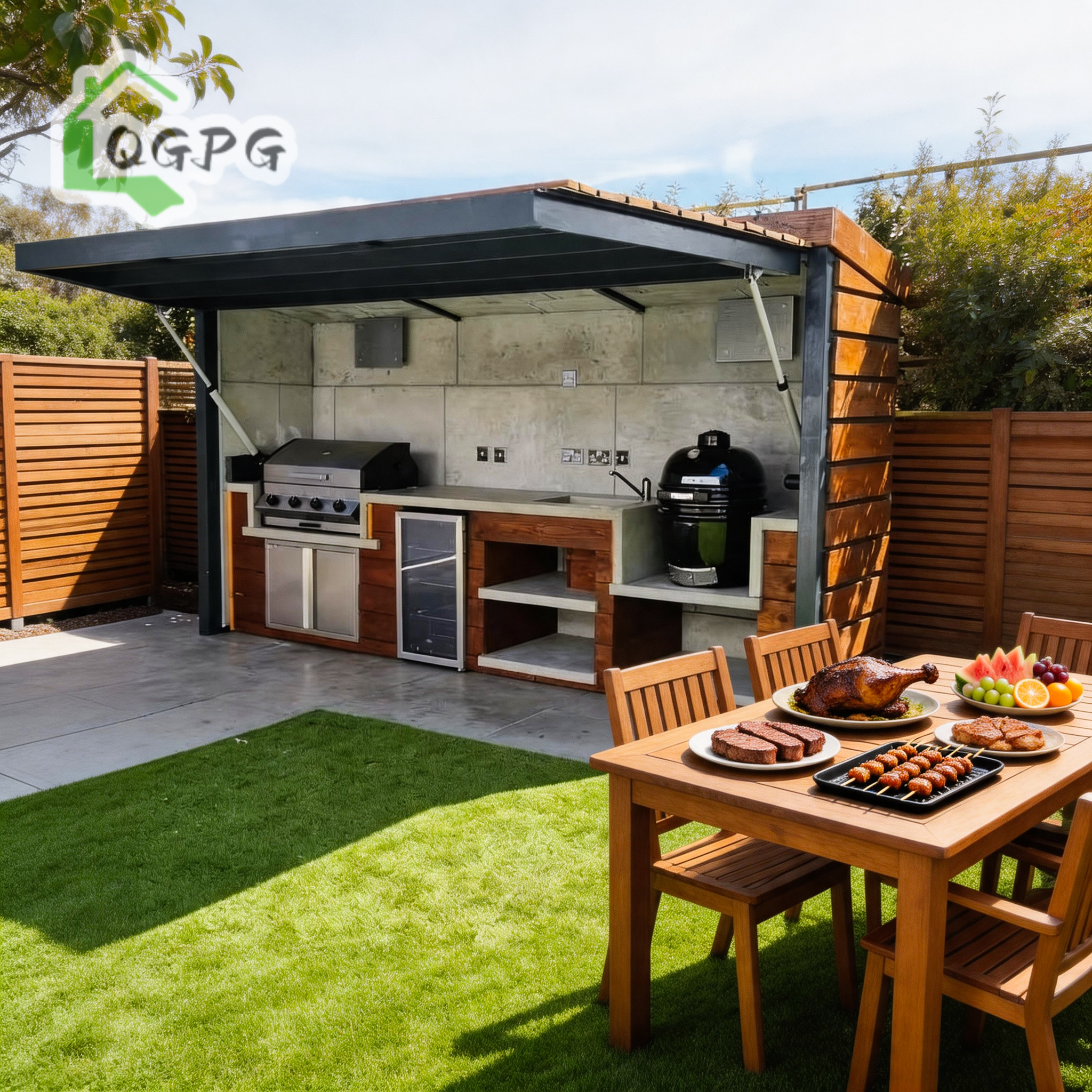
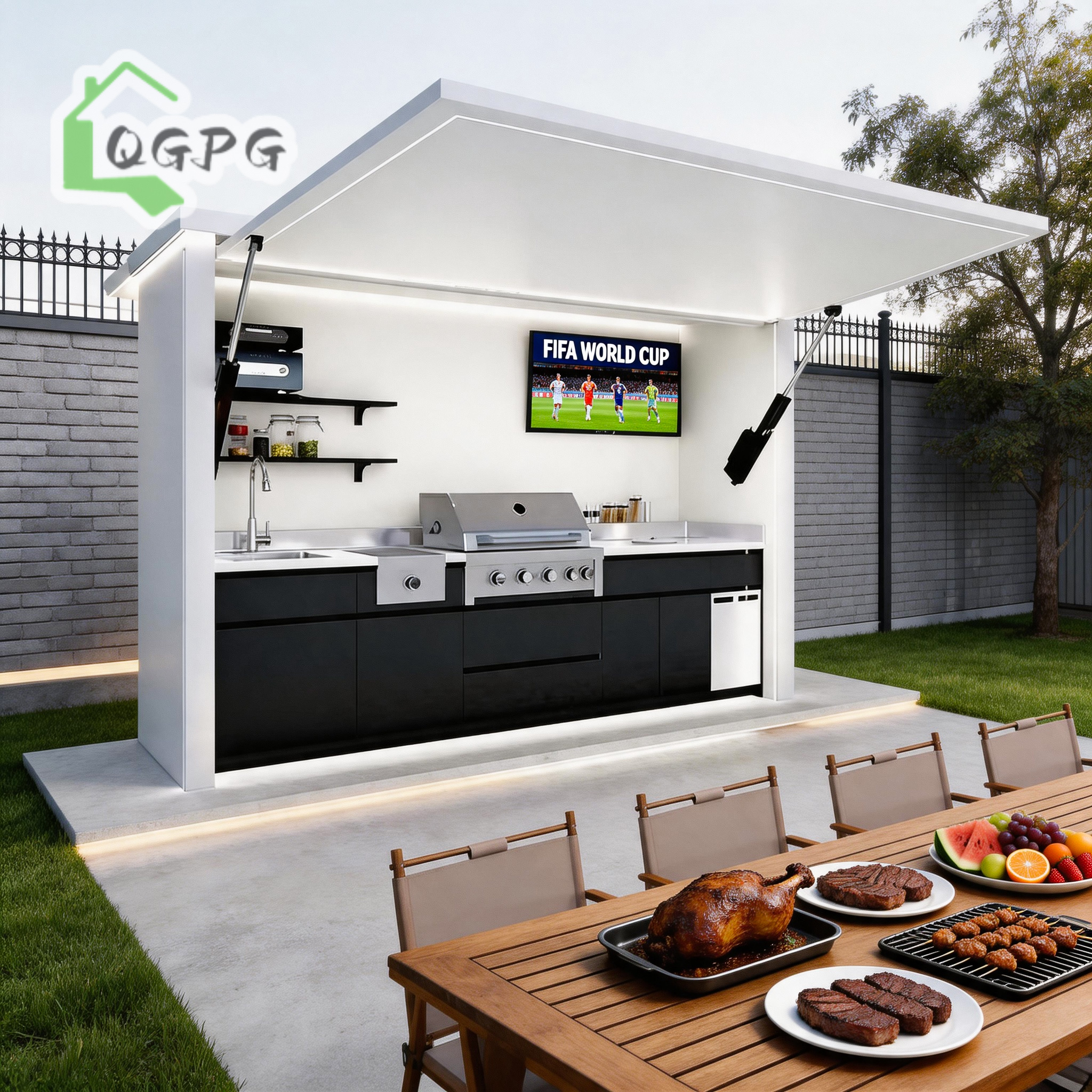
German outdoor beer gardens, hotel terraces, and event venues deploy BSU’s 304 Marine Grade Stainless Steel motorized canopy stations. These turnkey units protect high-end cooking equipment against rain and frost with full hydraulic enclosure mechanisms.
Construction & Infrastructure Site Offices
Heavy engineering projects across Nordrhein-Westfalen and Baden-Württemberg require robust, rapidly relocatable site offices. BSU flat-pack and detachable container modules provide high sound insulation (DIN 4109) and pre-installed VDE-compliant electrical distribution.
Emergency & Transitional Municipal Housing
Municipalities seeking fast deployment for transitional community housing benefit from BSU folding container houses. Unfolded in under 15 minutes with a standard crane truck, these units drastically reduce field setup overhead.
Engineered Specifications: Traditional vs. BSU Modular vs. Standard Shipping Container
Evaluating total cost of ownership (TCO) for tiny houses and modular buildings in Germany requires comparing structural life cycle, insulation performance, and transport parameters.
| Performance Parameter | Traditional On-Site Masonry | BSU Engineered Modular Tiny House | Converted Standard Shipping Container |
|---|---|---|---|
| Thermal Insulation (U-Value) | 0.18 - 0.24 W/(m²K) | 0.20 - 0.24 W/(m²K) (GEG Ready) | 0.45 - 0.85 W/(m²K) (High Thermal Bridging) |
| Structural Frame Standard | Reinforced Concrete / Brick | Galvanized Cold-Formed Steel (DIN EN 1090) | Corten Steel (Prone to internal condensation) |
| On-Site Build Duration | 6 to 12 Months | 1 to 3 Days (Turnkey Hookup) | 2 to 4 Weeks (Fit-out required) |
| Permitting / Statik Compliance | Standard Local Process | Complete Pre-calculated Eurocode 3 Drawings | Difficult to certify wall cutouts |
| Relocation Capability | Permanent (Zero mobility) | High (Crane-liftable or Trailer-mounted) | Moderate (Heavy weight) |
| Corrosion Protection Class | N/A | ISO 12944 Class C3/C4 Powder Coated | Variable depending on paint wear |
By eliminating condensation risks via integrated vapor retarders (sd-value ≥ 100m) and providing custom non-combustible Rockwool or PIR insulation options (Class A1 / B-s1,d0 per EN 13501-1), BSU units comfortably navigate German fire safety regulations (Musterbauordnung - MBO).
Frequently Asked Questions for German B2B & Private Buyers
Addressing Regulatory, Transport, Permits, and Sourcing Requirements in Germany
Do I need a building permit (Baugenehmigung) for a tiny house in Germany?
How do BSU tiny houses achieve full compliance with Germany's Gebäudeenergiegesetz (GEG)?
What foundation type is required for BSU modular homes under German soil conditions?
How are BSU units shipped from China to Germany and delivered to the final jobsite?
What customs duties (Zoll) and import taxes apply when importing tiny houses into Germany?
Are BSU electrical and plumbing installations compliant with VDE and DIN standards?
Factory Competence & E-E-A-T Guarantee: Hebei BSU Building Materials Technology Co., Ltd.
Sourcing prefabricated structural assets from overseas requires verified technical capability, manufacturing scale, and quality assurance transparency. Hebei BSU Building Materials Technology Co., Ltd. operates as a verified custom manufacturer with on-site factory assessments conducted by Intertek.
Employing over 80 verified engineers, welders, and technical personnel, BSU operates automated CNC laser cutting, automated roll-forming, and robotic welding lines in Hebei Province. Every modular home, expandable container house, and outdoor canopy kitchen undergoes rigorous multi-stage quality control:
- 100% Water-Tightness Spray Testing: High-pressure water jet audits simulate severe rainfall to verify seam sealant integrity.
- Structural Deflection Audits: Roof and floor trusses are load-tested to ensure zero permanent deformation under snow and occupancy loads.
- Electrical Safety Isolation Checks: High-potential insulation resistance tests guarantee safety before export packaging.
Whether you require a single bespoke Tiny House on Wheels or a 200-unit modular worker camp in Germany, BSU provides direct engineering consultations, custom BIM/CAD models, and rapid production schedules.
Start Your German Tiny House & Modular Project with BSU
Request technical specifications, CAD layout drawings, GEG insulation calculation sheets, and direct factory-direct pricing for export to Germany.
Get Catalog